Take a Walk in the Woods: What Wild Trees Teach a Tree Assessor
A family walk through Goll Woods turned into a lesson in tree assessment. Why every arborist should spend time looking at trees nobody manages.
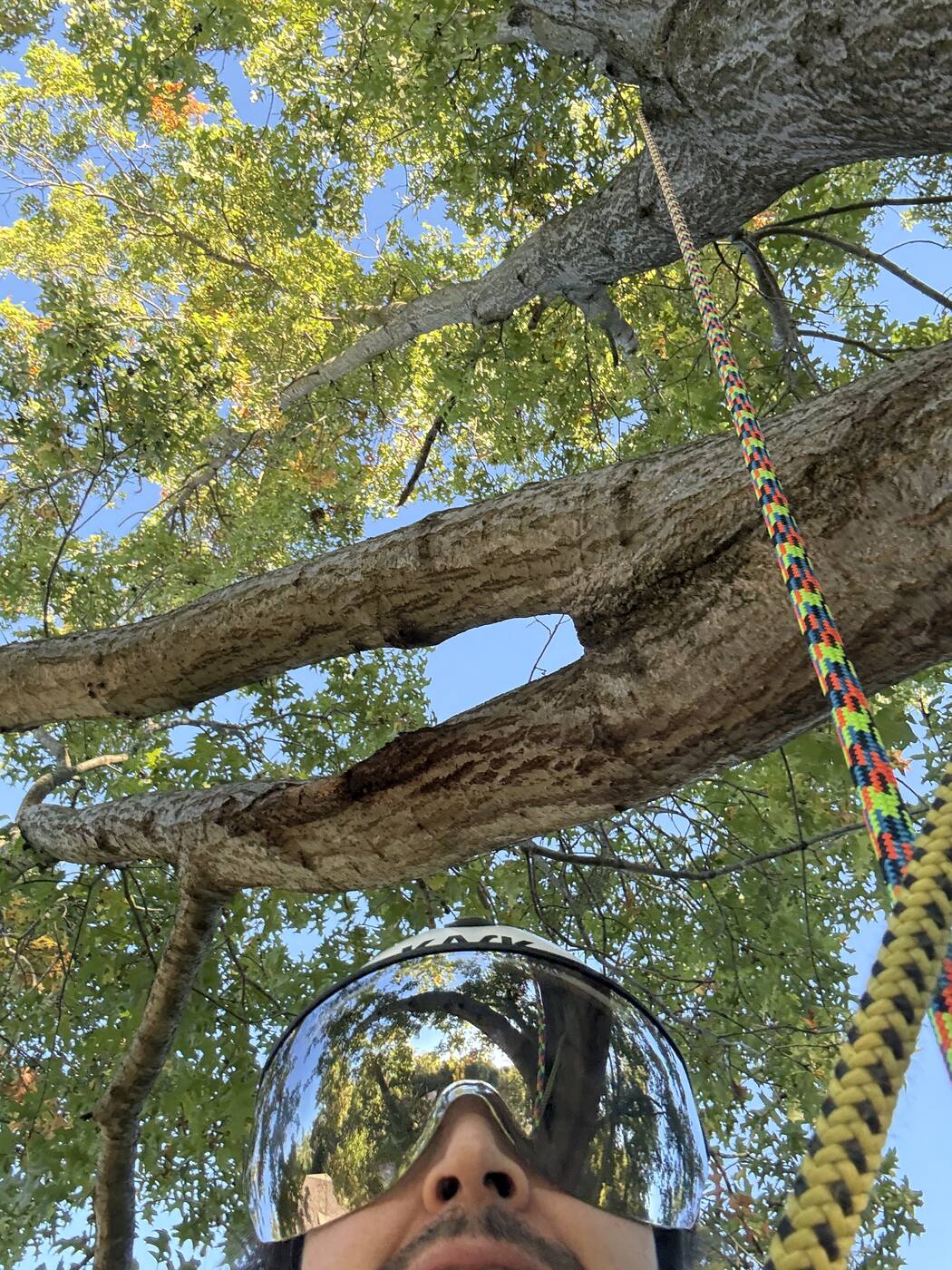 By Adam O'Connor, ISA Certified Arborist
6 minutes read
On this page
The other day my family and I went for a walk through Goll Woods. It’s an excellent woods, with virgin timber and a nice population of bur oaks (Quercus macrocarpa), and it’s the kind of place where you can’t help looking at every tree you pass.
Walking through, it’s amazing to see all the trees that have either failed or are on the brink of failure, and yet are still standing. Some of them are extreme cases: trees I would have rated without a second thought as imminent failures, still up, still growing.
Why it’s a good exercise
A walk like this is a good exercise for a tree assessor. In a yard or along a street you see the trees someone has planted, pruned and cared for. In the woods you see every condition there is, in every stage, with nobody stepping in to fix it. You see what a defect looks like ten or forty years on, how a tree answers a wound, and which trees actually come down.
It’s also a reminder of why we assess trees in the first place. The only reason we assess trees, prune trees and take care of trees is that they’re around people and the things people value. In the wild, trees fall, create habitat, and no one really minds. It’s just the natural way.
So I’d suggest any tree assessor head out to a local park, woods or forest and get a glimpse of some of nature’s wonders, from a tree assessment point of view. Here are some of my favorites from the walk.
Carvings that never go away
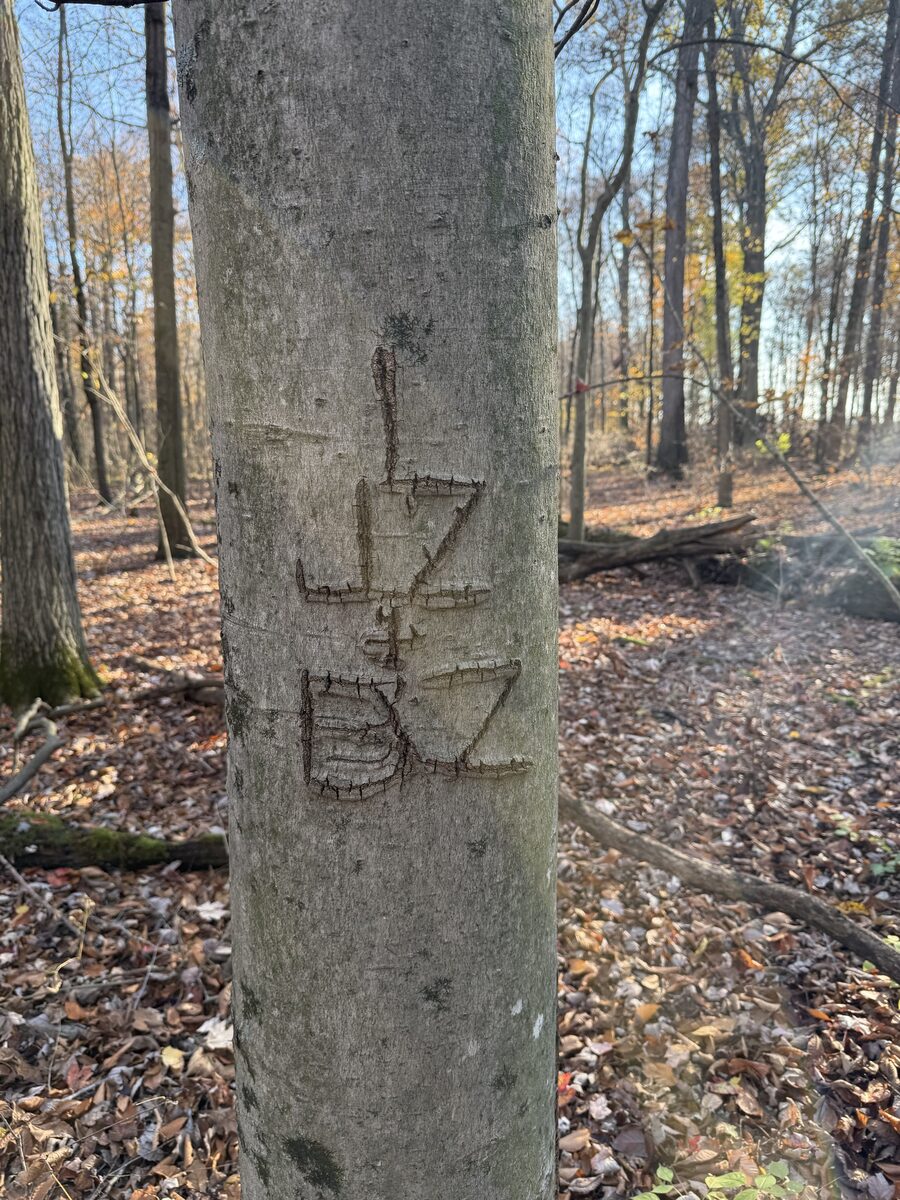
Beeches have thin, smooth bark, and every carving stays with them for life. The tree doesn’t erase a wound; it grows new wood around it and walls it off from the wood inside. The letters spread wider as the trunk grows, but they never close over.
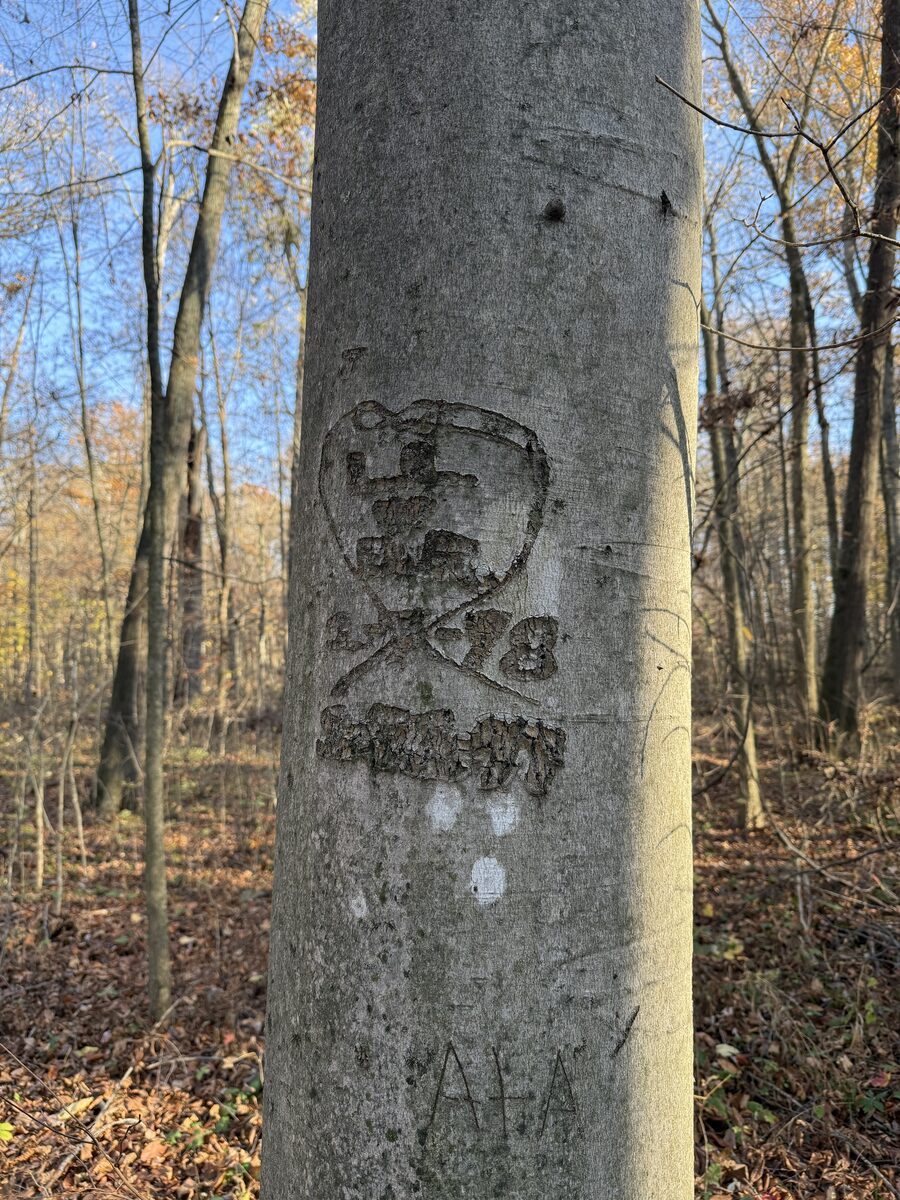
The date on this one looks like ‘78. If that’s right, the tree has carried that wound for more than forty years and is still standing. A carving is a wound, and a wound is a way in for decay, but a wound on its own doesn’t make a tree fail.
Wounds and the wood that closes them
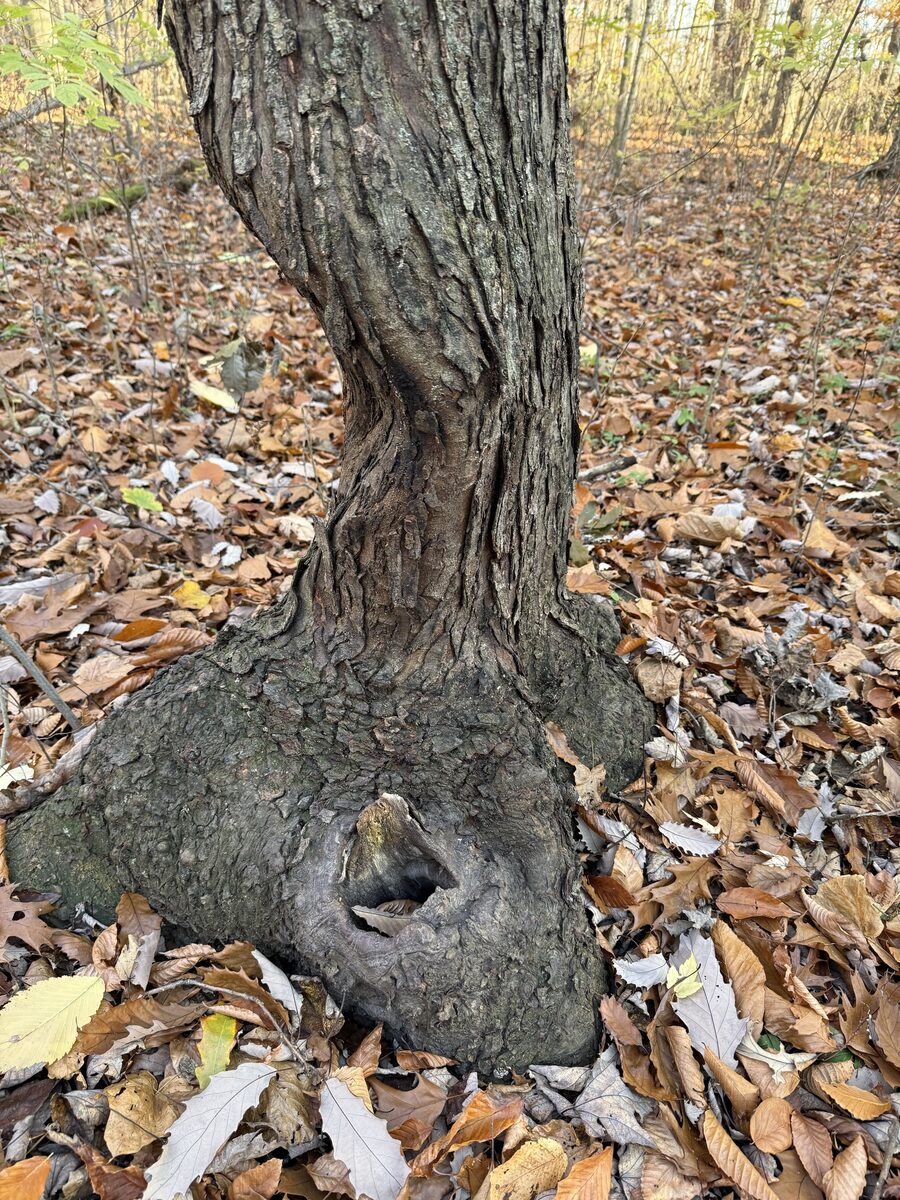
This tree has an old wound at its base that has opened into a cavity. Look at the edges: the tree has rolled new wood around the opening, thick and rounded. That’s the tree responding to the wound, and adding strength where it lost it.
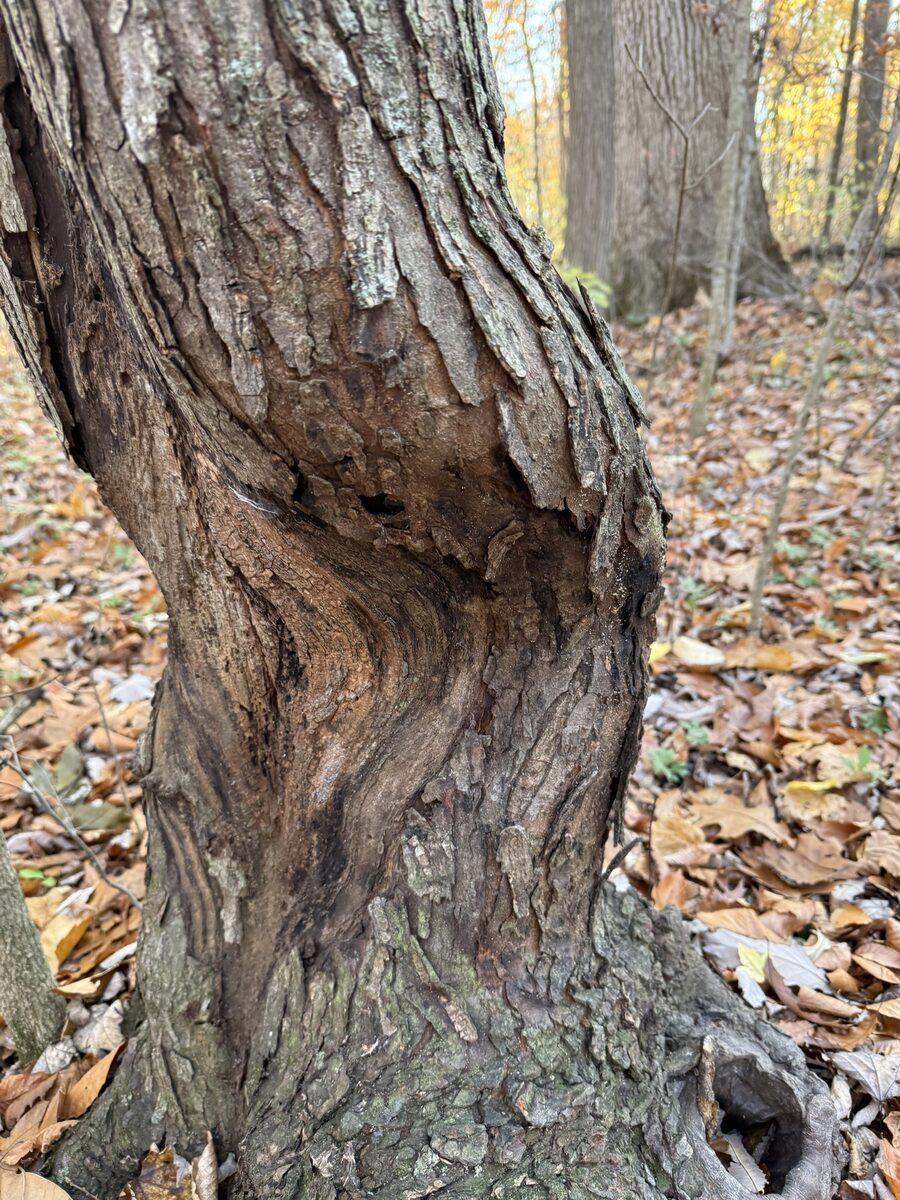
A little higher up the same trunk, the grain swirls around another old injury. A tree like this tells you its history if you look at it long enough.
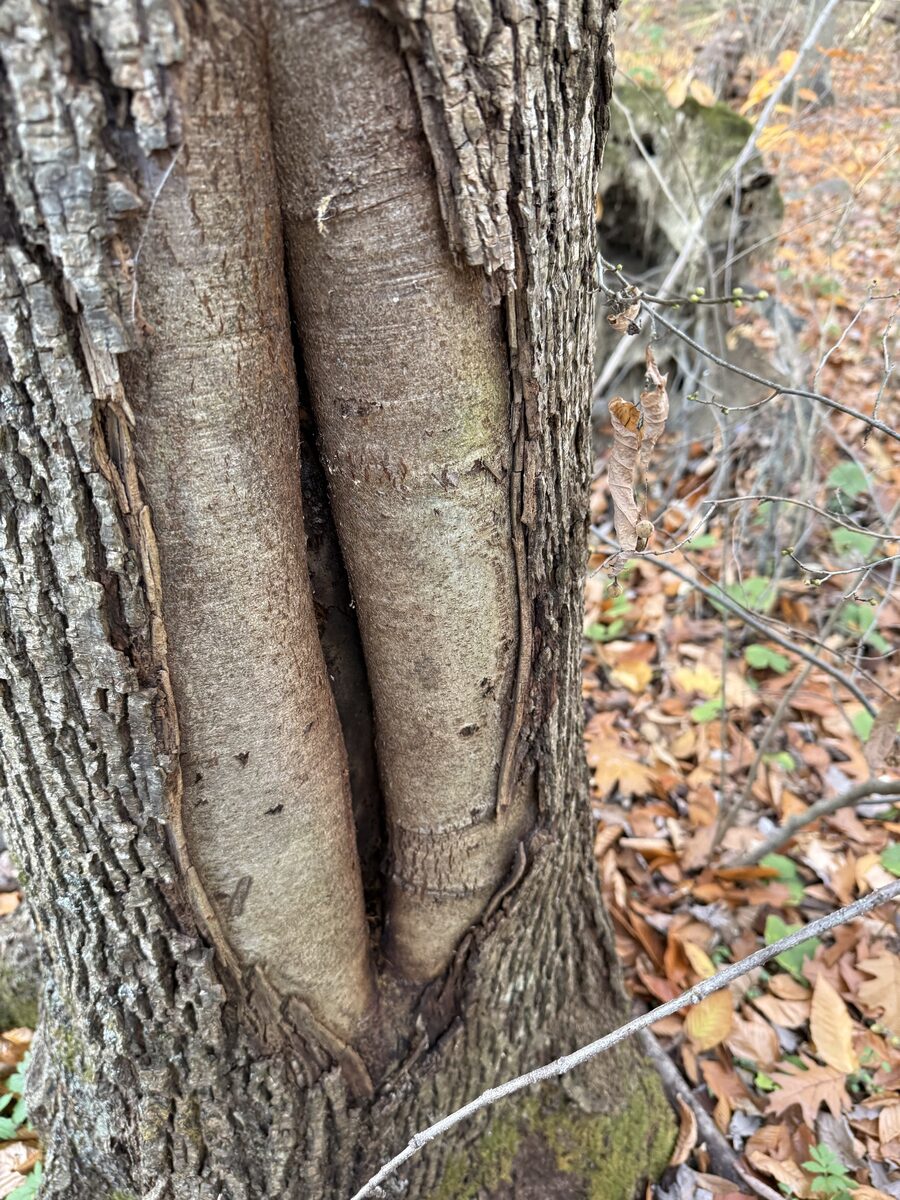
This is one of my favorites, a maple (silver or sugar; I’d want the leaves to say which). A long wound runs up the trunk, and the tree has grown two big rolls of woundwood up either side of it. From a distance it looks like a tree in trouble. Up close, it’s a tree that has been working on the problem for years, and is building its own support around the damage.
The big ones
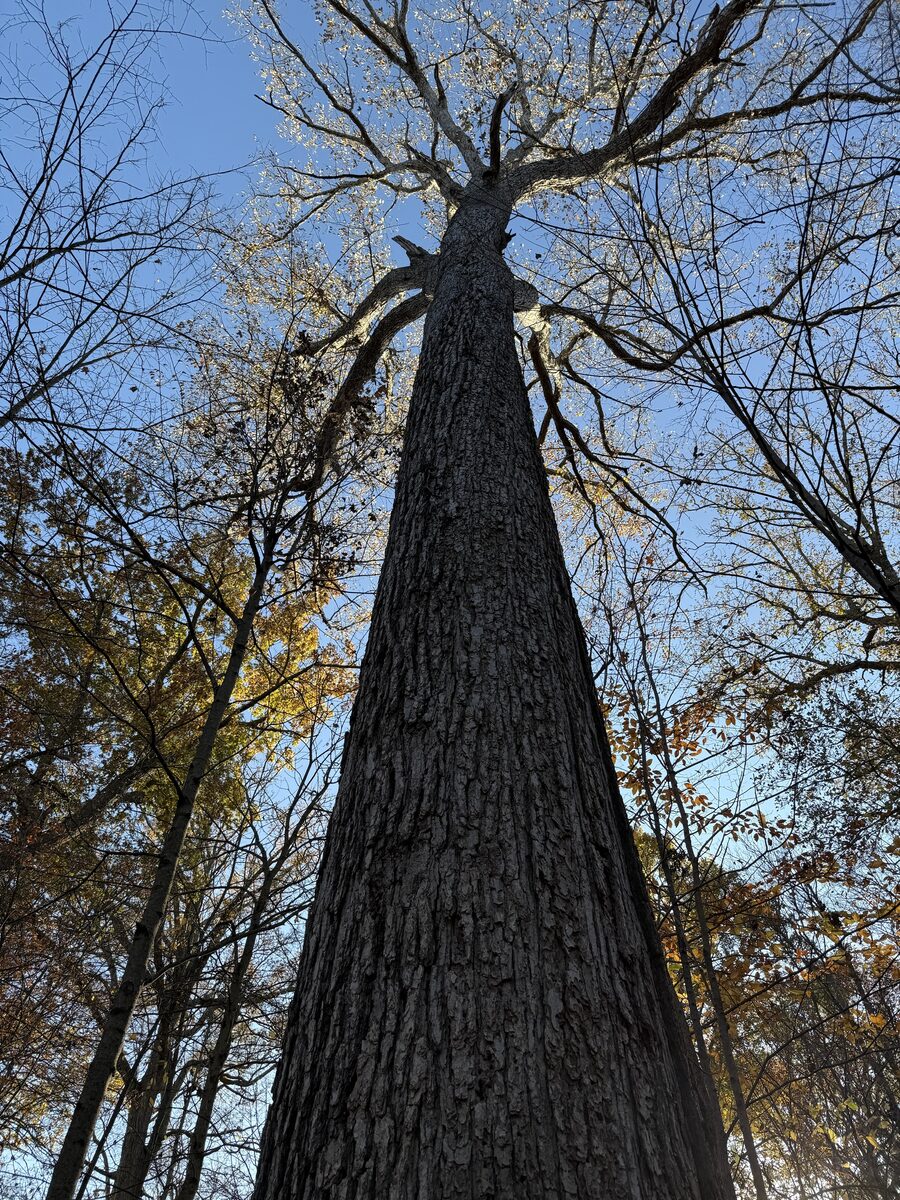
Then there are the big old trees, the reason the woods are worth the drive. The bur oaks are the stars. Standing at the base of one and looking up, you get a feel for how long these trees have been at it, and how much they’ve lived through: storms, lost limbs, dead branches in the crown, and still standing.
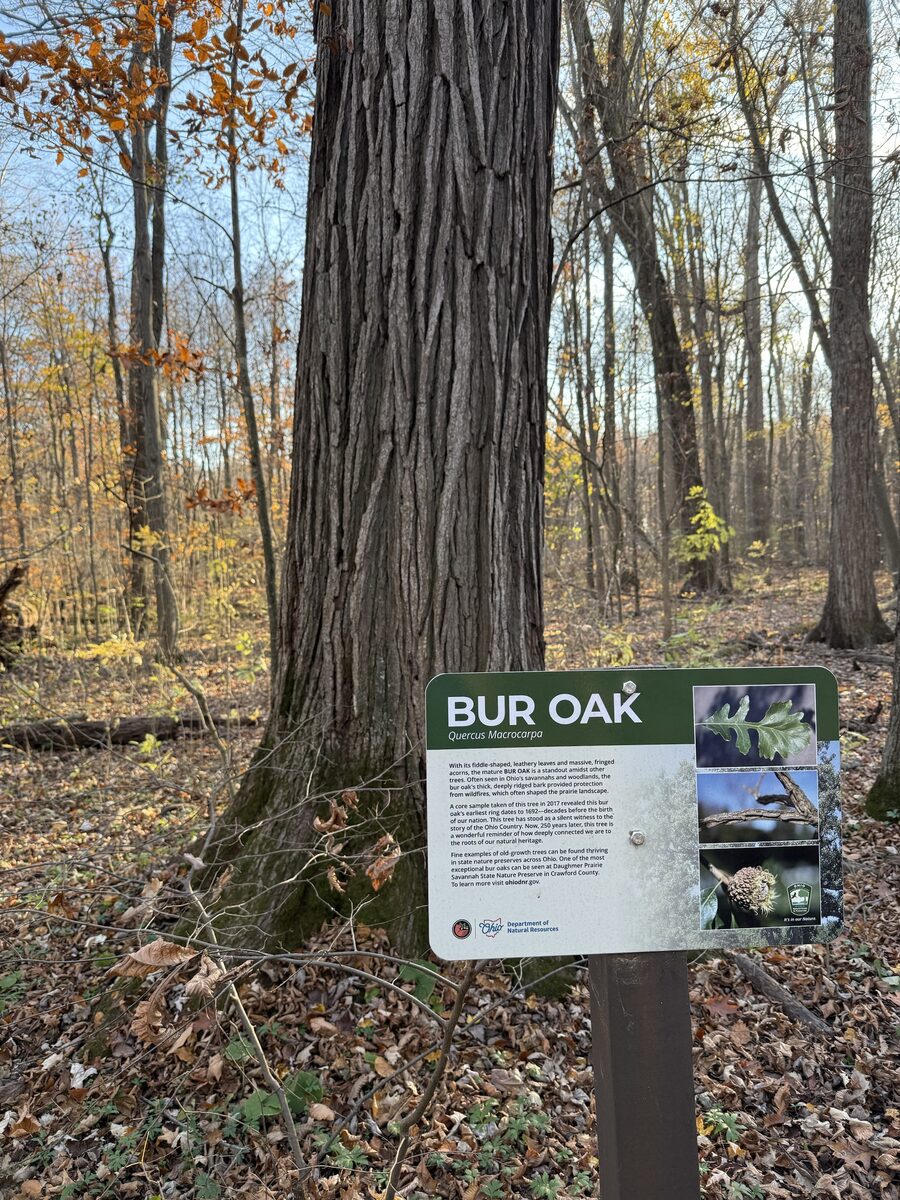
The sign beside this one says a core sample taken in 2017 dated its earliest ring to 1692. That’s more than 330 years of standing in one spot. If you ever want a reminder that a tree with dead wood and old wounds isn’t necessarily a tree about to fail, go stand next to one of these.
And sometimes they do fail
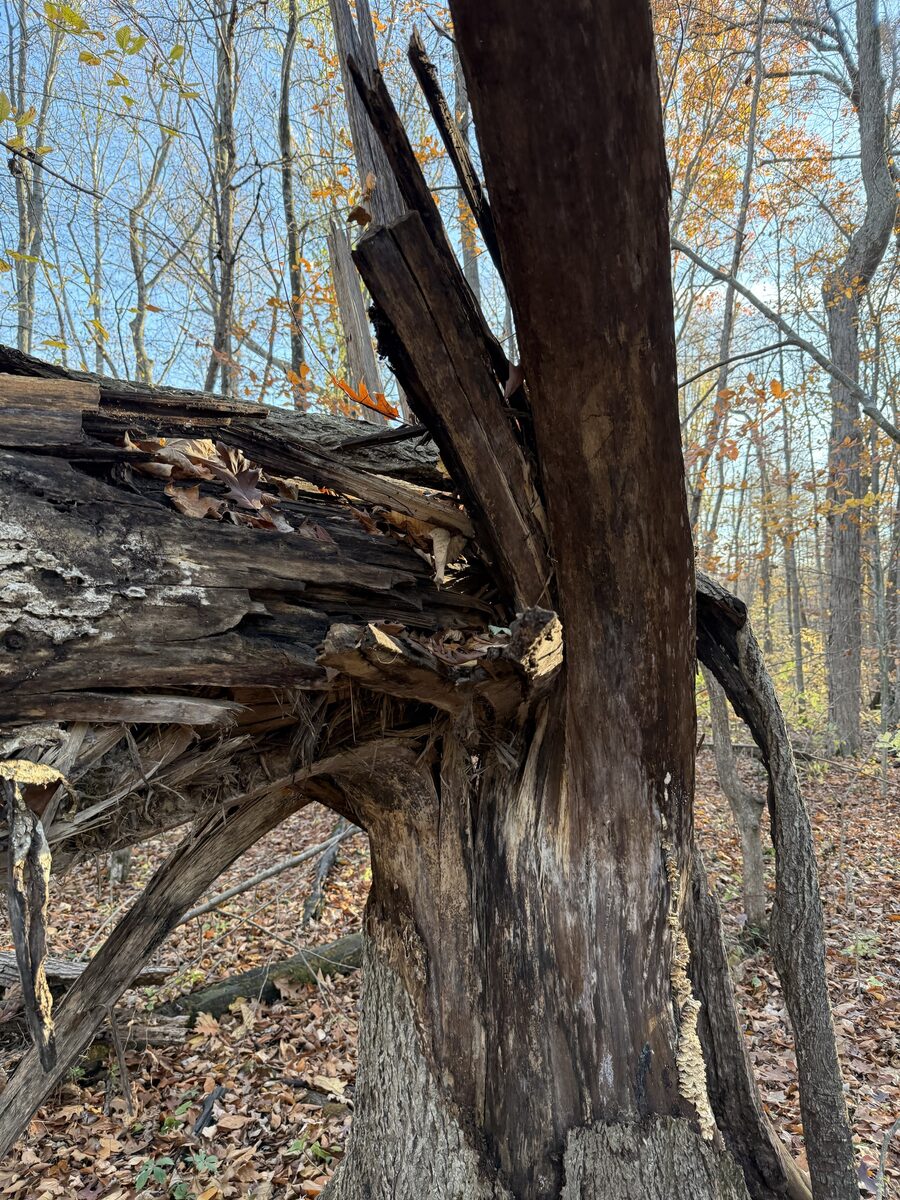
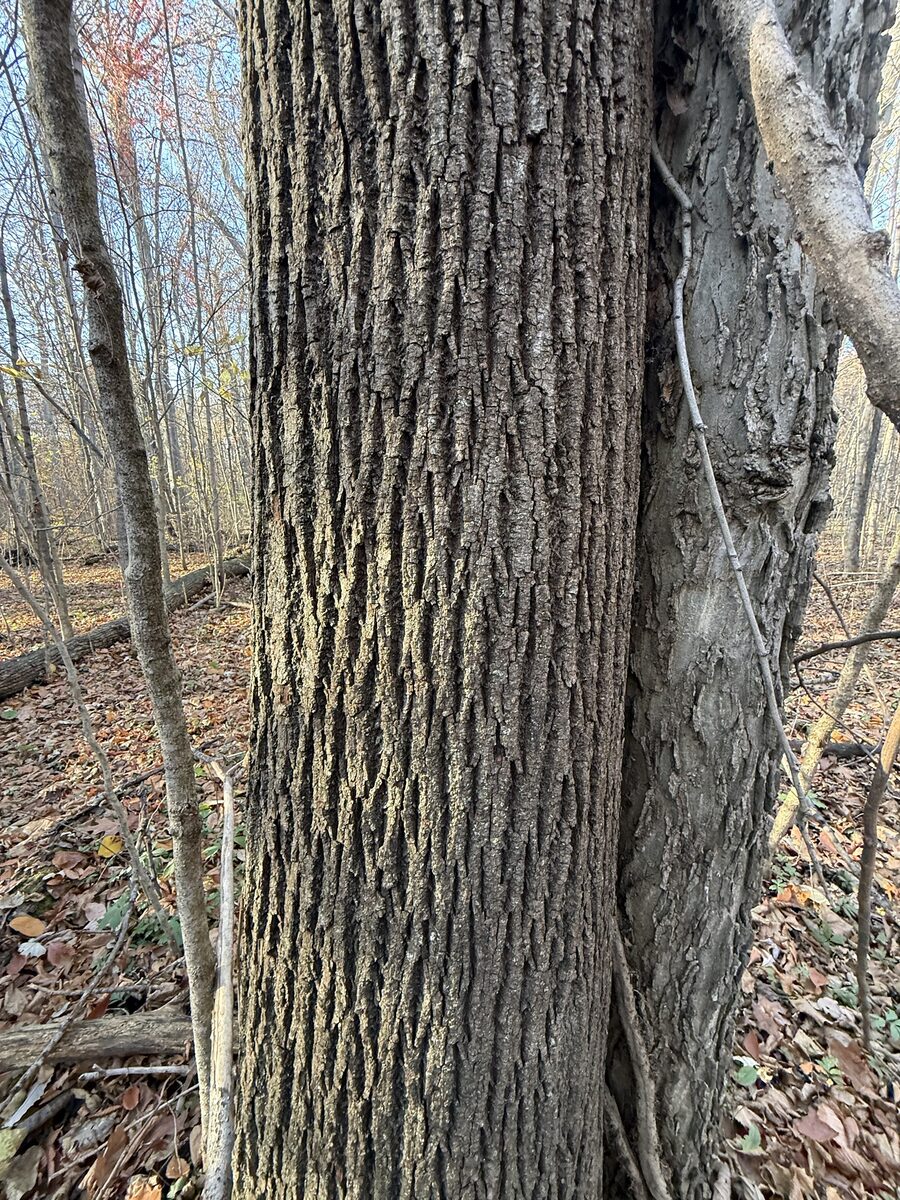
Not every tree makes it. This was a large white ash, a beautiful specimen in its day. It snapped and went over sideways, and you can see why: the broken wood is dark with decay, and there are bracket fungi growing on the stem. Out here it’s not a problem. It’s habitat now, for insects, fungi, birds and everything else that lives on dead wood.
Put the ash next to the maple with the woundwood rolls and you have the whole lesson of tree assessment: two trees with obvious defects, one still standing and one on the ground. Our job is to tell the difference, and then to ask what’s under it.
Get out there
You don’t need a famous woods for this. A state park, a city park or the woods at the edge of town will do. Take a walk, bring your family, and look at the trees nobody is managing. Take some photos, guess what’s going on, and see how often the tree surprises you.