Case Study: A Healthy-Looking Sycamore That Sounded Hollow
A big street sycamore with a full, green crown, until the mallet found a hollow sound four feet up. What I saw, how I rated it, and what comes next.
 By Adam O'Connor, ISA Certified Arborist
5 minutes read
On this page
At a glance
- Tree: American sycamore, Platanus occidentalis
- Size: 25.5 inches DBH, about 78 feet tall
- Setting: A street tree between the sidewalk and the street, Northwest Ohio
- What’s in reach: A house, the sidewalk, and the street with its parked cars
- Overall risk rating: Moderate, over 12 months, preliminary until the trunk is tested
- Recommended: An advanced assessment of the trunk within 90 days, reduce the long limbs, and check the tree again every year
Why I was called
I was called out to take a look at this sycamore. For the assessment I used a scope, a probe, a tape measure and a mallet.
The site and what’s in reach
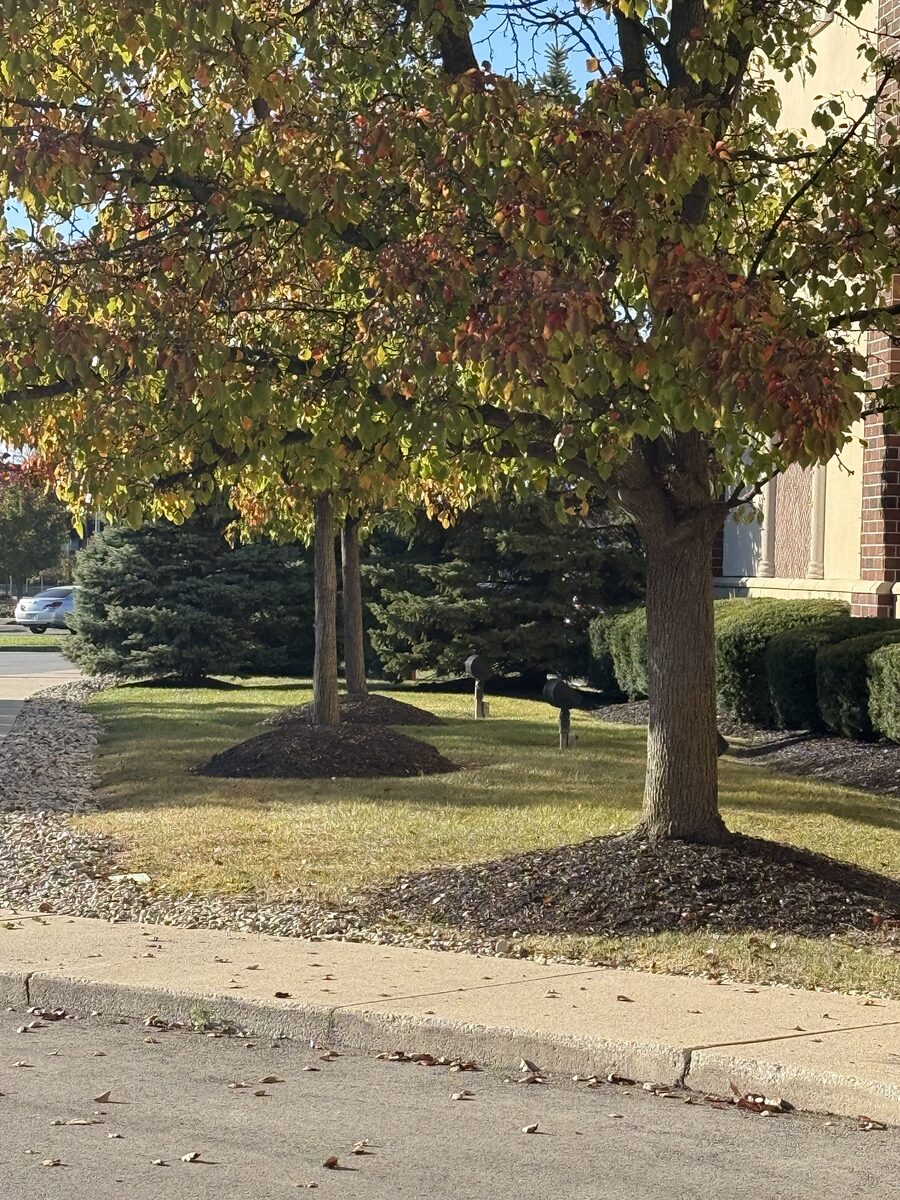
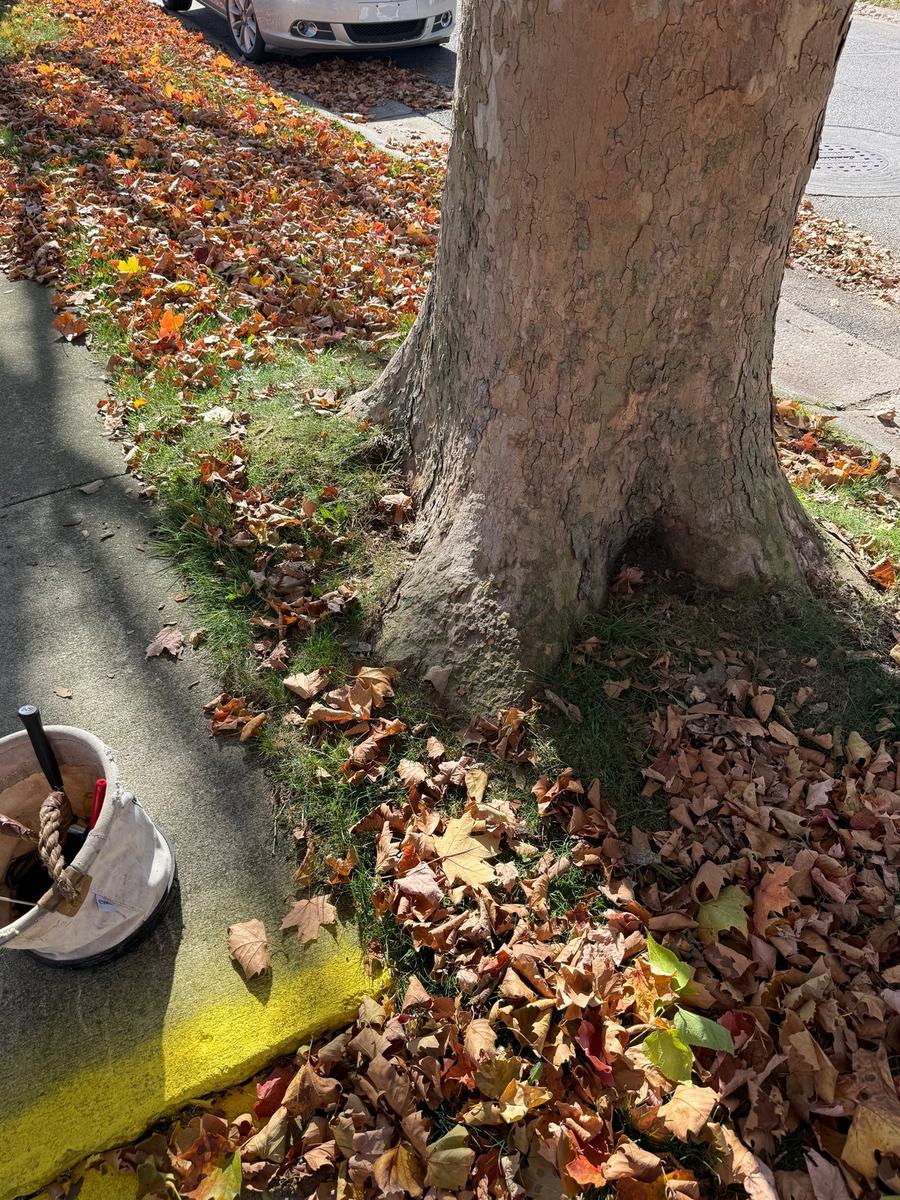
The sycamore stands in the strip between the sidewalk and the street. Its crown covers all three things it could hit: a house that’s there all the time, a sidewalk people walk now and then, and a street where cars are parked or passing most of the day. The roots have the usual street-tree problem: a curb on one side, a sidewalk on the other, and not much room in between.
What I saw
At first glance, this tree looked amazing. A healthy crown, no dieback, just a solid, good, healthy American sycamore.
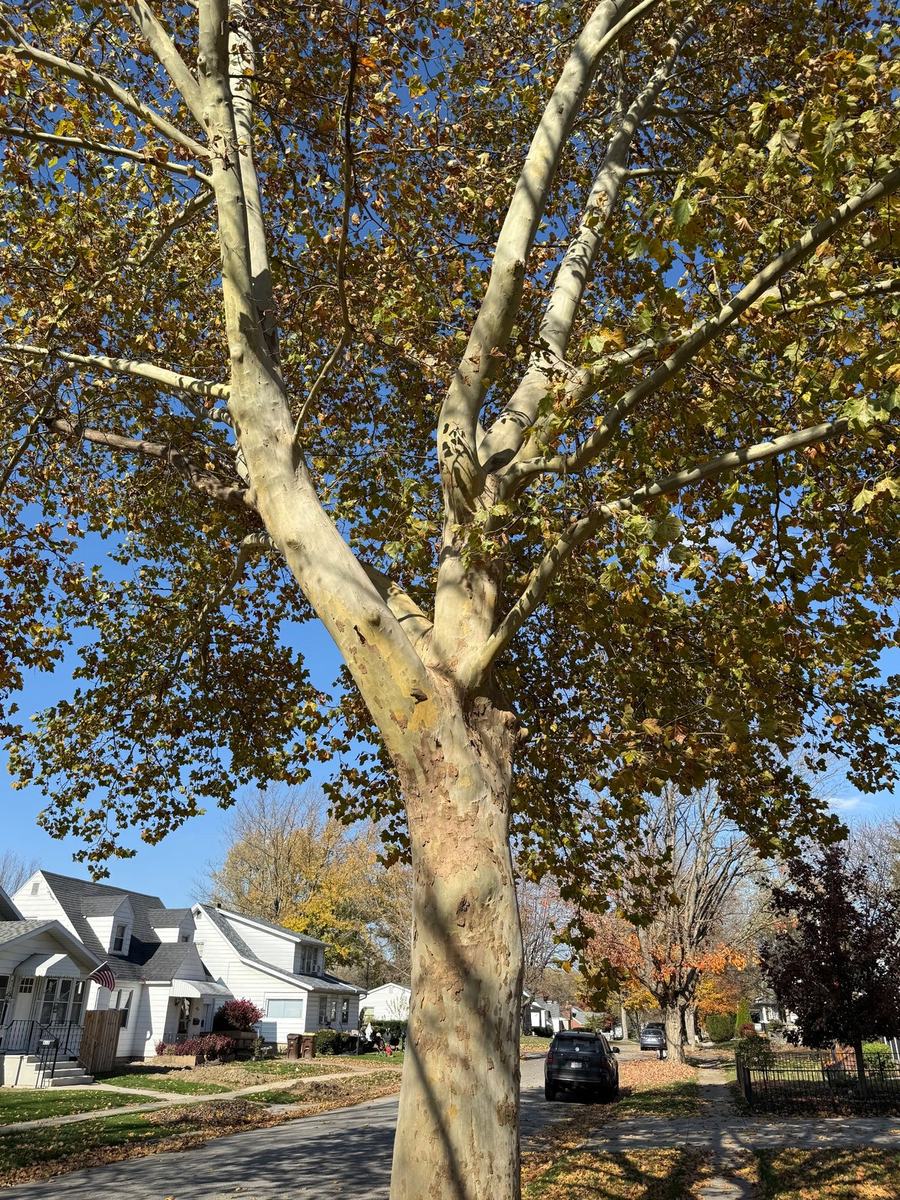
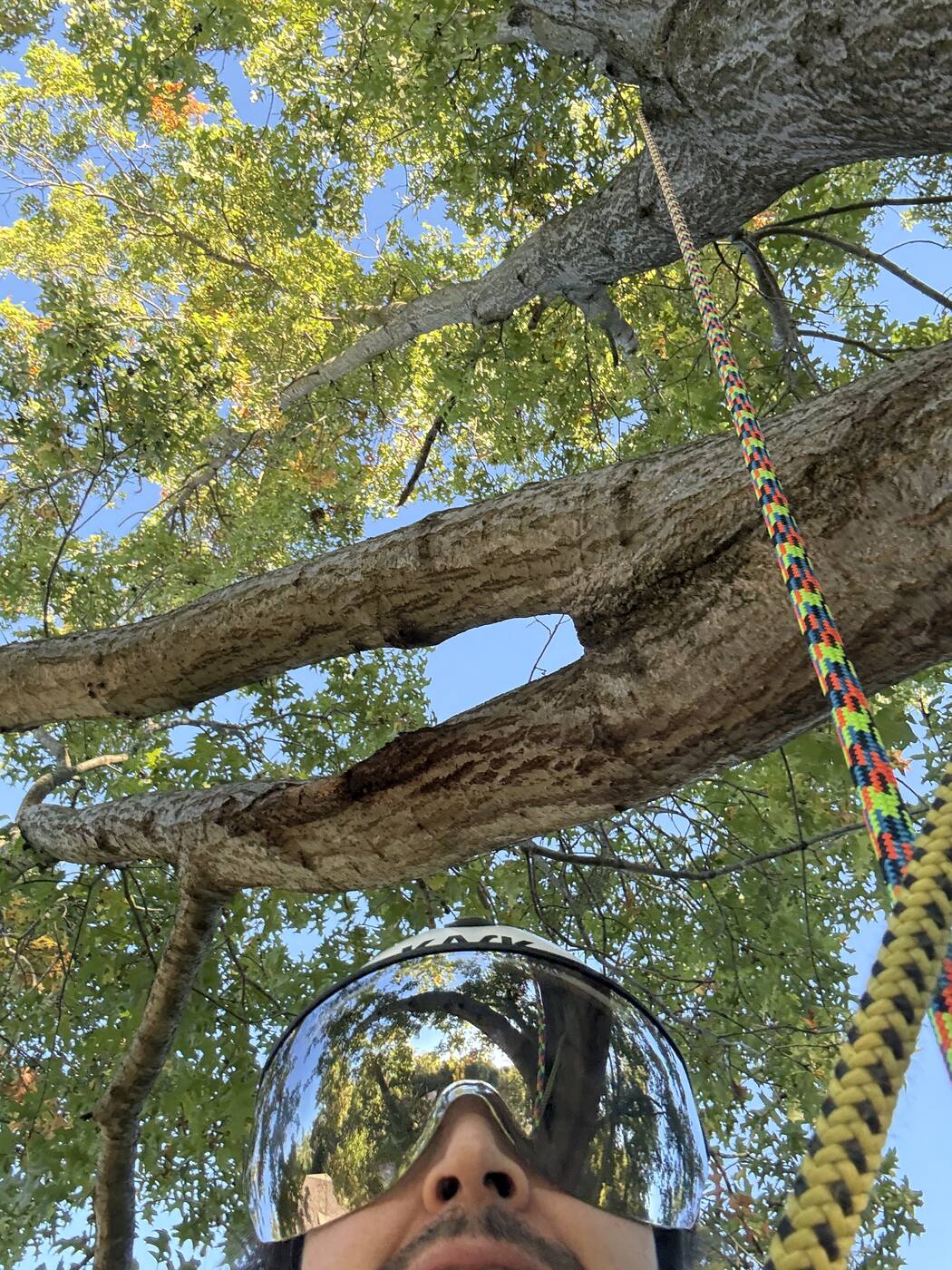
When I scoped the crown, I could find very little dead wood, and hardly any bad pruning cuts or small cavities, things like that. Some of the limbs are long and reach well out, and the trunk leans about 5 degrees toward the street, but overall I just kept thinking this tree looks amazing.
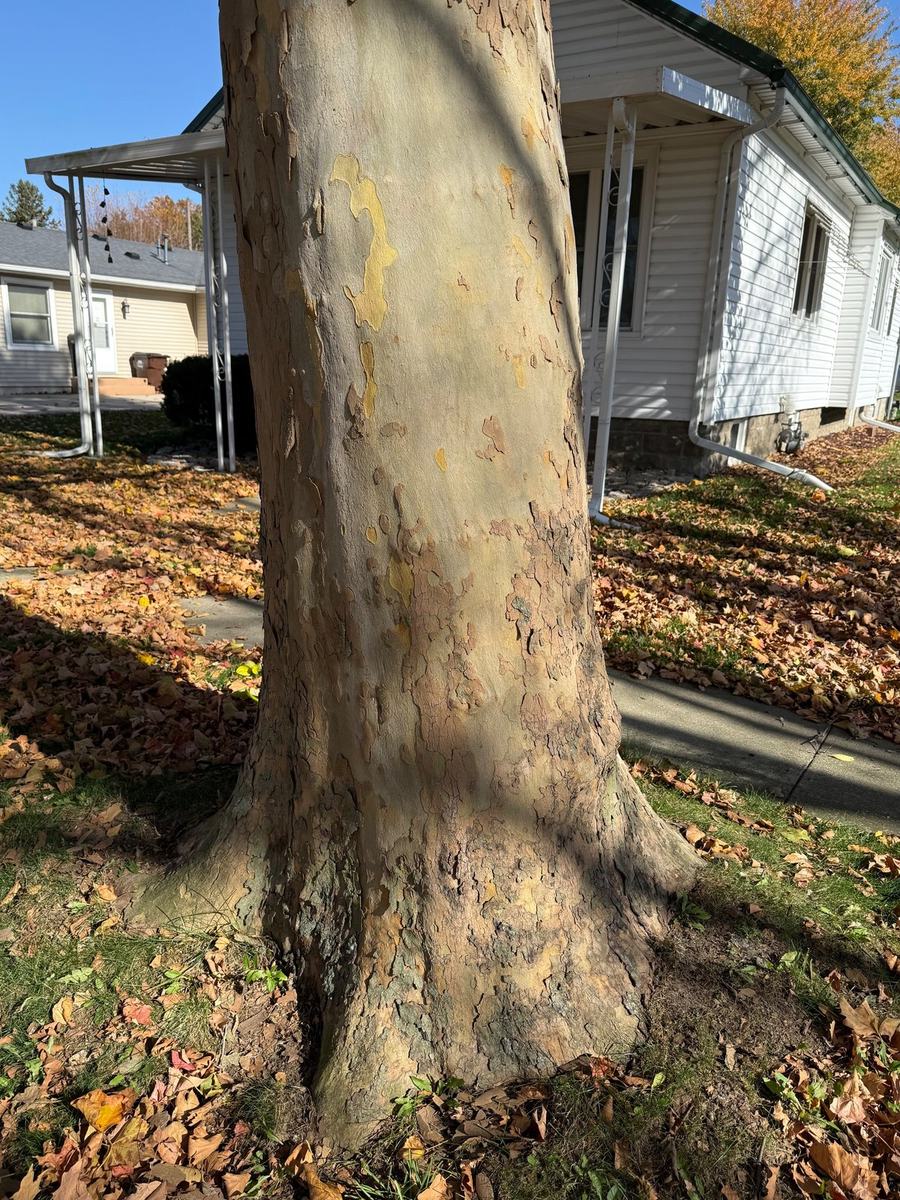
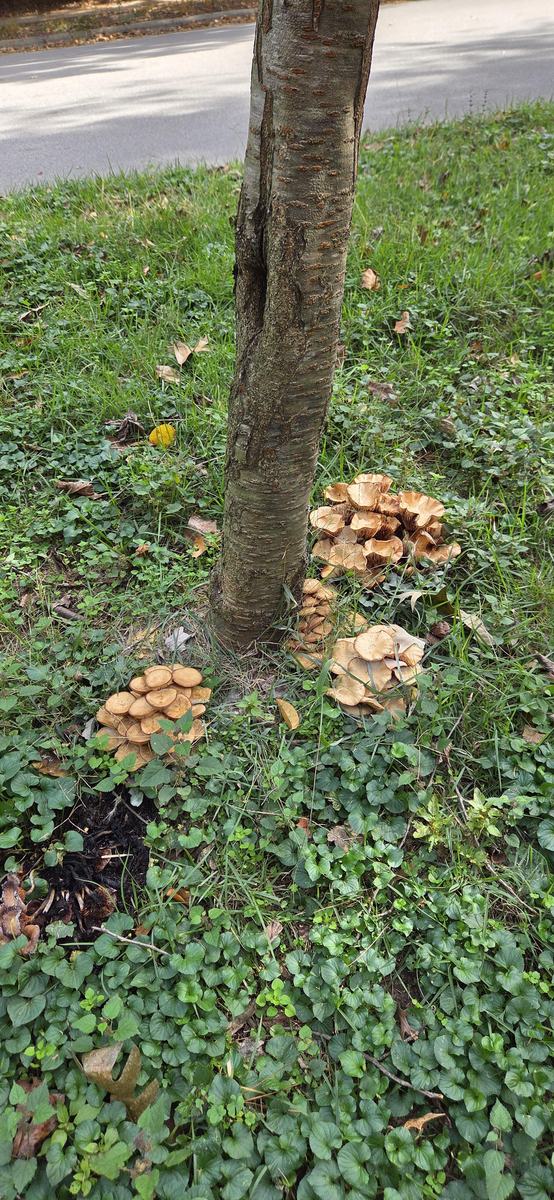
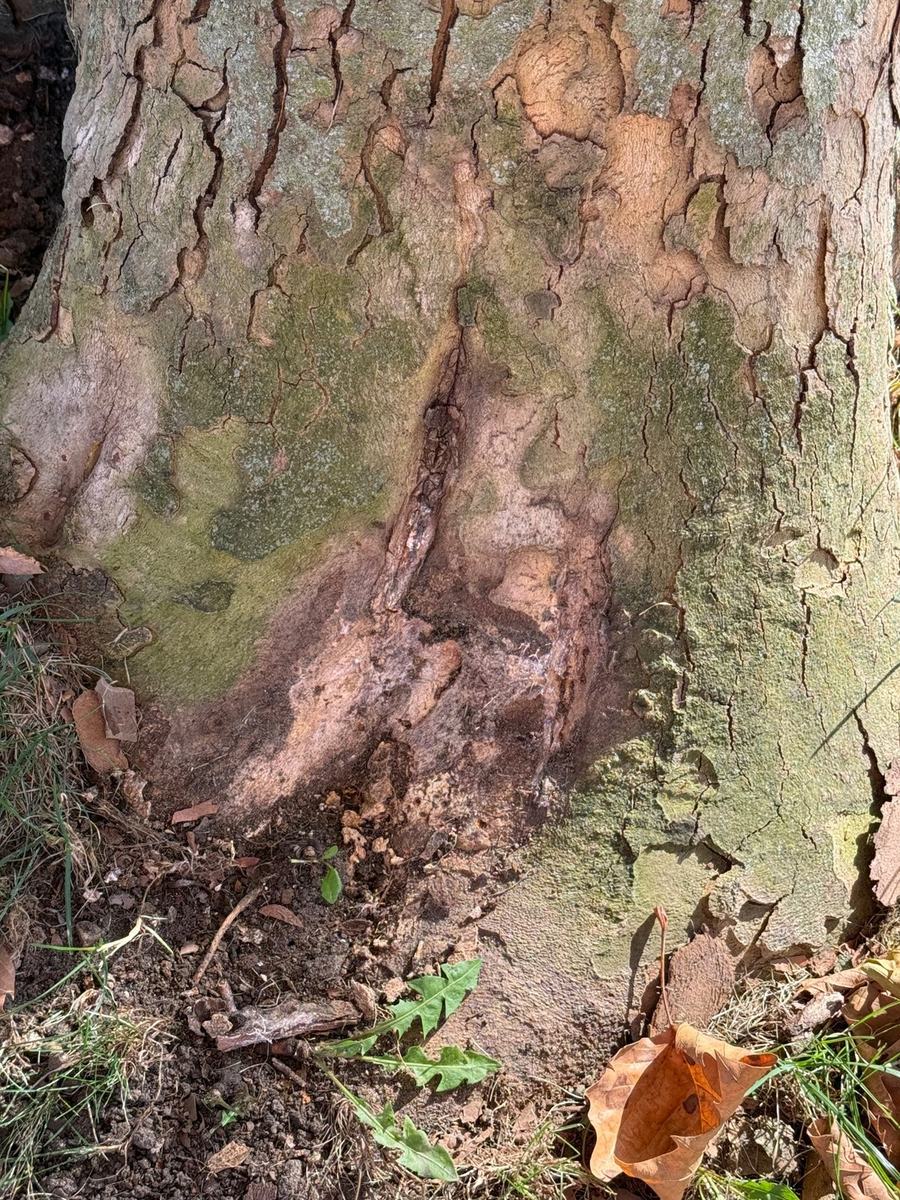
Then I started probing around the roots and looking for decay. I did find a little white rot around some of the root flare, but it wasn’t bad. Honestly, it seemed more like mycelium growing on the surface than decay inside, which is likely with all the leaves that have been falling this autumn.
A closer look
Everything was great up until I sounded the trunk. That’s when everything went south.
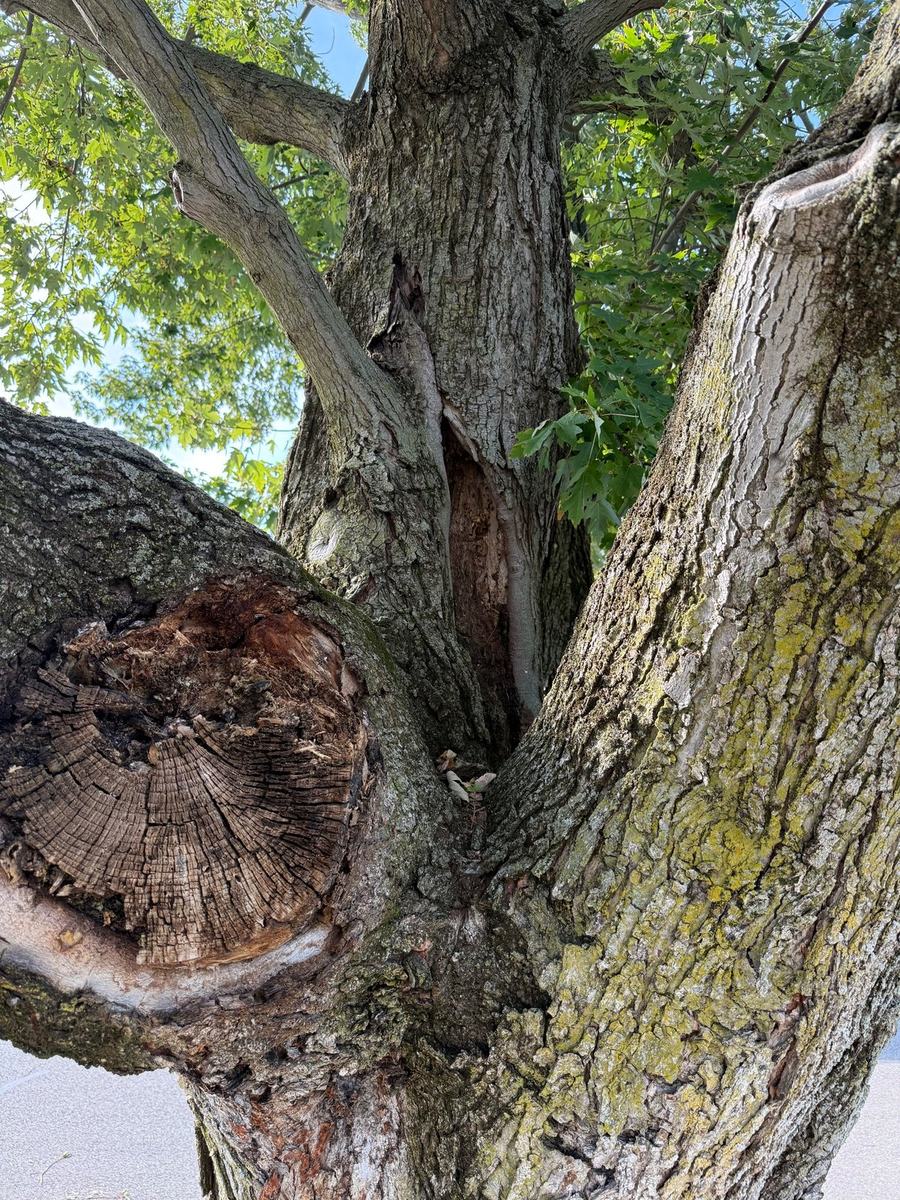
The roots sounded solid. The trunk sounded solid above about 5 to 6 feet. But from about 2 feet up to about 4½ feet, I started getting hollow sounds, and by 4 feet it was very obvious the tones were hollow.
That concerns me because sycamores have a tendency to rot out. Their heartwood seems more susceptible to decay than most woods. How many times have you walked along a river and seen sycamores that were hollowed out?
A mallet can tell you something’s different in there, but not how much sound wood is left. For that the trunk needs an advanced assessment, with sonic tomography or resistance drilling, to find out whether it’s hollow or not.
How I rated the risk
Falling limbs. The long limbs are 15 to 20 inches across and would fall 50 to 60 feet. I rated failure possible within the year. Onto the sidewalk, a hit would be somewhat likely and the harm significant, so that’s Moderate. Onto the street and parked cars the harm would be minor, giving Low.
Trunk failure. With hollow sounds from 2 to 4½ feet up, I rated failure possible. The house is there all the time and in reach of the trunk, so a hit would be somewhat likely and the damage significant: Moderate. Onto the sidewalk, where people only pass now and then, a hit was unlikely: Low.
That makes the overall rating Moderate. I marked the assessment preliminary, because what’s inside that trunk could change it.
What I recommended
- An advanced assessment. Sonic tomography or resistance drilling through the hollow-sounding stretch, to find out how much sound wood is left. The answer decides what happens to the trunk.
- Reduction. Shorten the long limbs to take weight off them. That brings the falling-limb risk down to Low.
- Reinspection every year. With the trunk checked every year, its risk comes down to Low.
What happened
I told the owner what I’d found and why it concerned me, and suggested the advanced assessment. We agreed to do it within the next 90 days. I’ll add what it shows here.
What this tree taught me
A tree can look amazing from every angle and still have a problem you only find by sounding it. A full green crown says nothing about what’s inside the trunk, and with a species like sycamore, whose heartwood is prone to rot, that’s the part I most want to hear.