Case Study: Old Wounds Over a Busy Sidewalk
A big silver maple street tree with a cavity, an open trunk seam and rock piled on its roots. What I saw, how I rated it, and why I'd take it down.
 By Adam O'Connor, ISA Certified Arborist
6 minutes read
On this page
At a glance
- Tree: Silver maple, Acer saccharinum
- Size: About 30 to 40 inches DBH, 55 to 70 feet tall
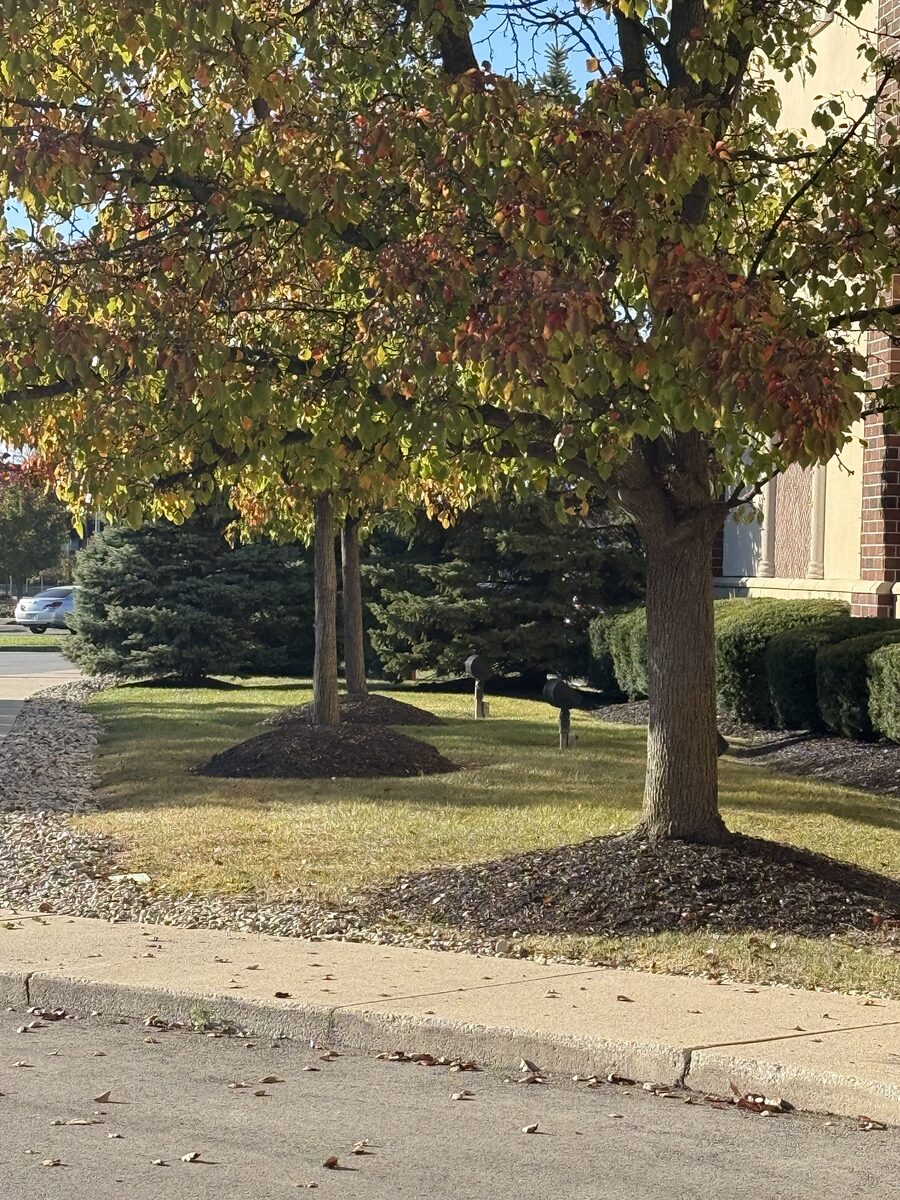
- Setting: A street tree in a narrow tree lawn, Northwest Ohio
- What’s in reach: The public sidewalk and street, parked and passing cars, a driveway, and the houses on both sides of the street
- Overall risk rating: Moderate, over 12 months
- Recommended: Remove the tree and plant something new in its place
Why I was called
The city asked me to have a look at this tree because the homeowner was concerned due to all the severe weather.
The site and what’s in reach
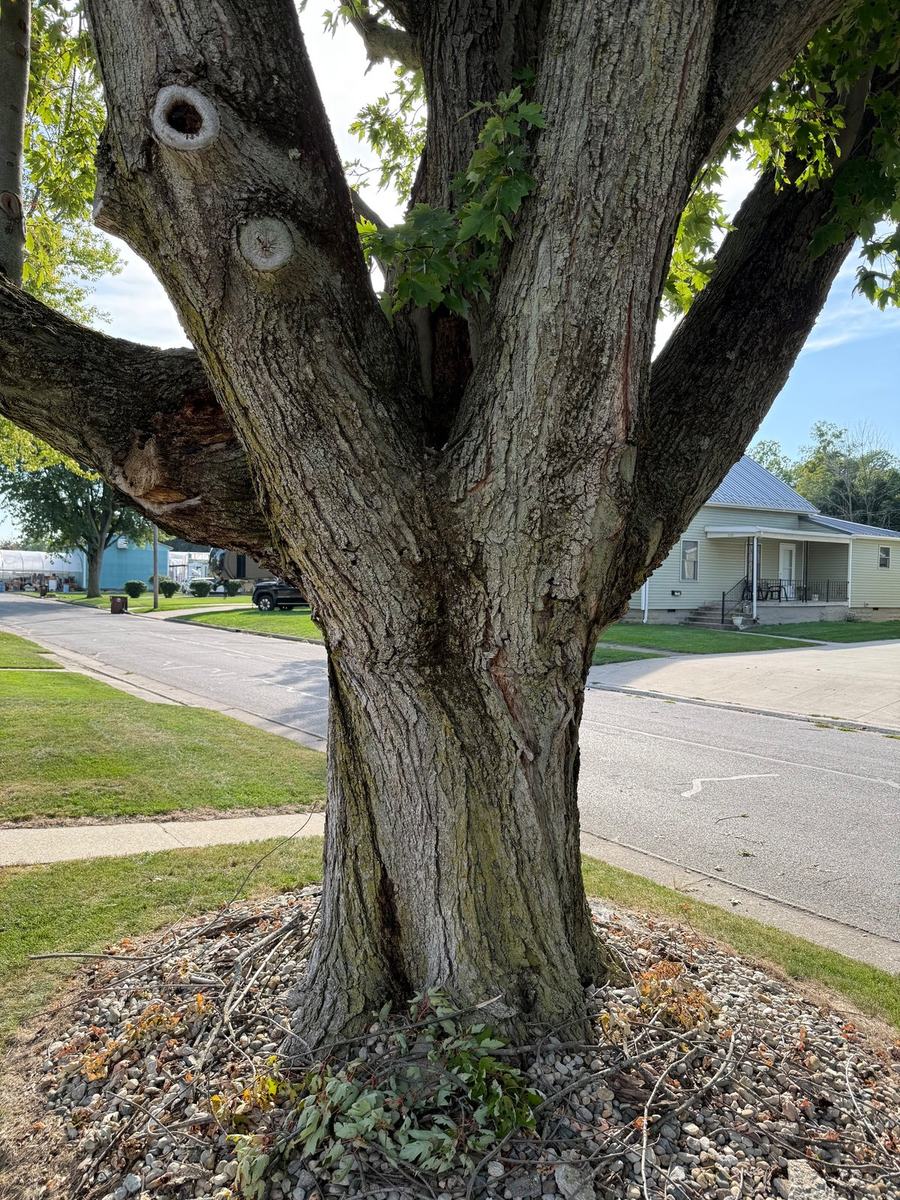
This maple stands in a narrow strip of grass between the sidewalk and the street, with a driveway apron beside it. Its crown spreads over all of it. People walk under it every day, cars park and drive beneath it, and the houses on either side of the street, porches and steps included, are within one tree height. One big lead reaches out over a house.
What I saw
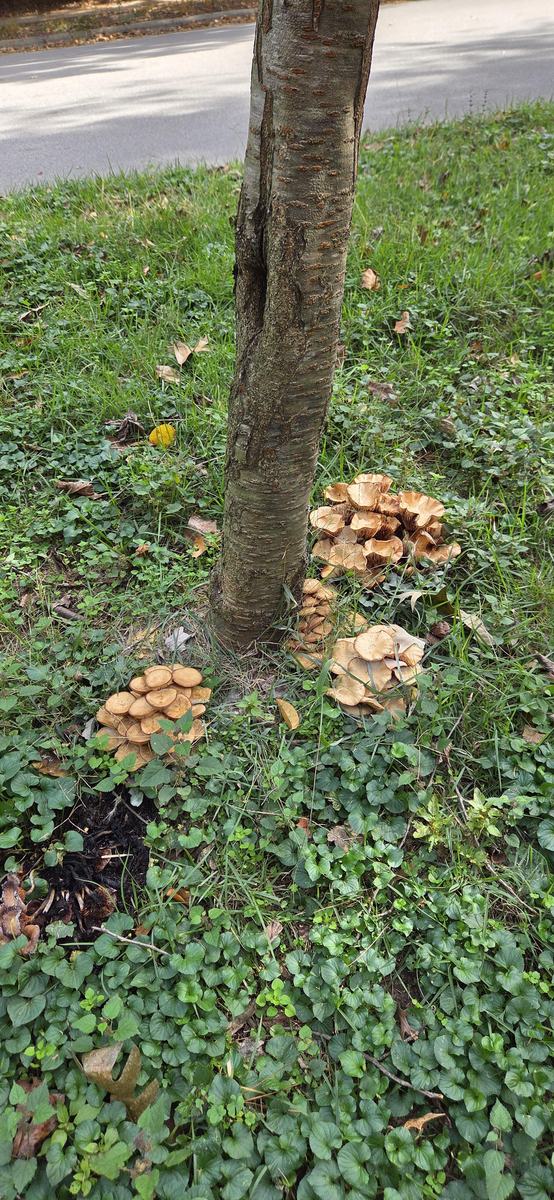
At first glance I could see there was definitely some dieback in the crown, and some pretty gnarly growth going on in the trunk.
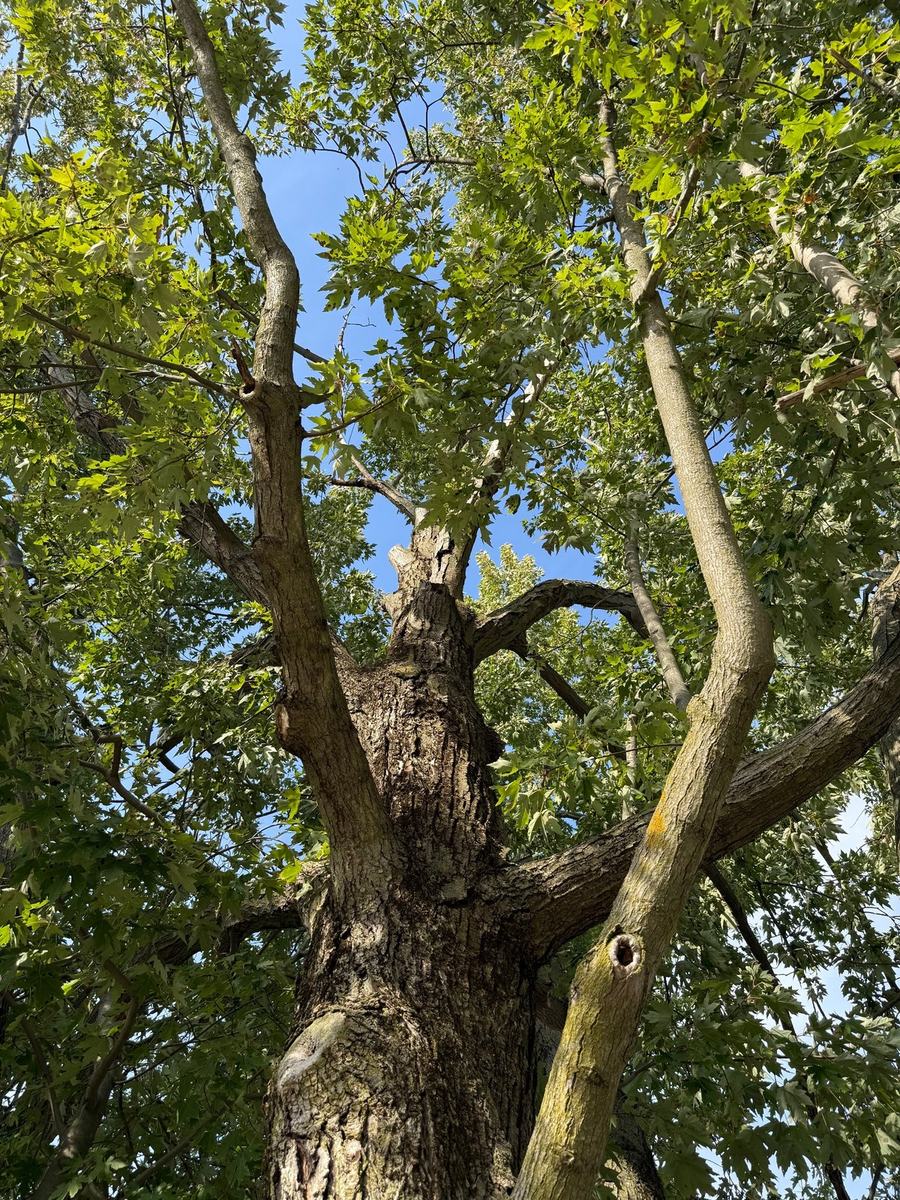
The roots were unfortunate. They were buried too deep, covered over with a ring of decorative river rock piled right up against the trunk, and with the sidewalk, the street and the driveway all close by, there’s not much room for the tree to grow. Even so, the tree has done a pretty good job.
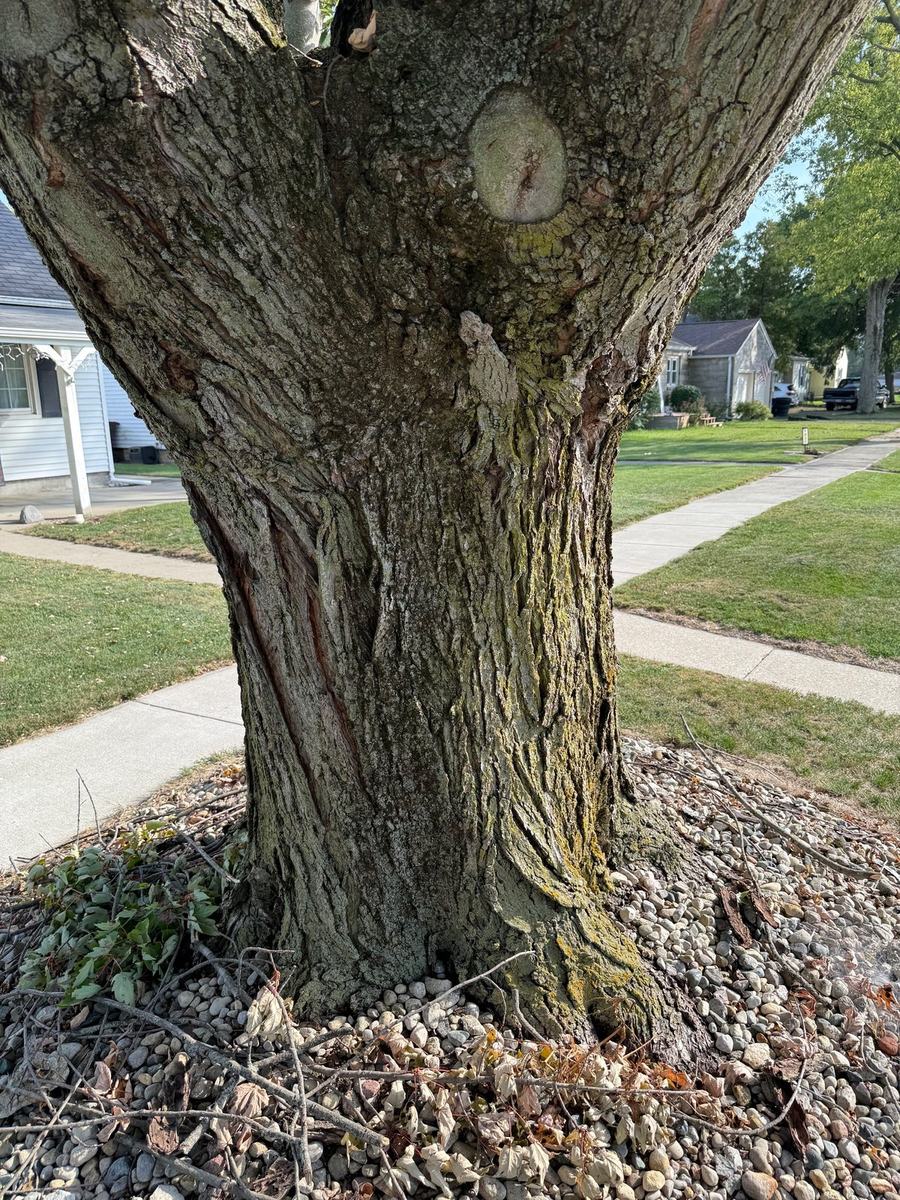
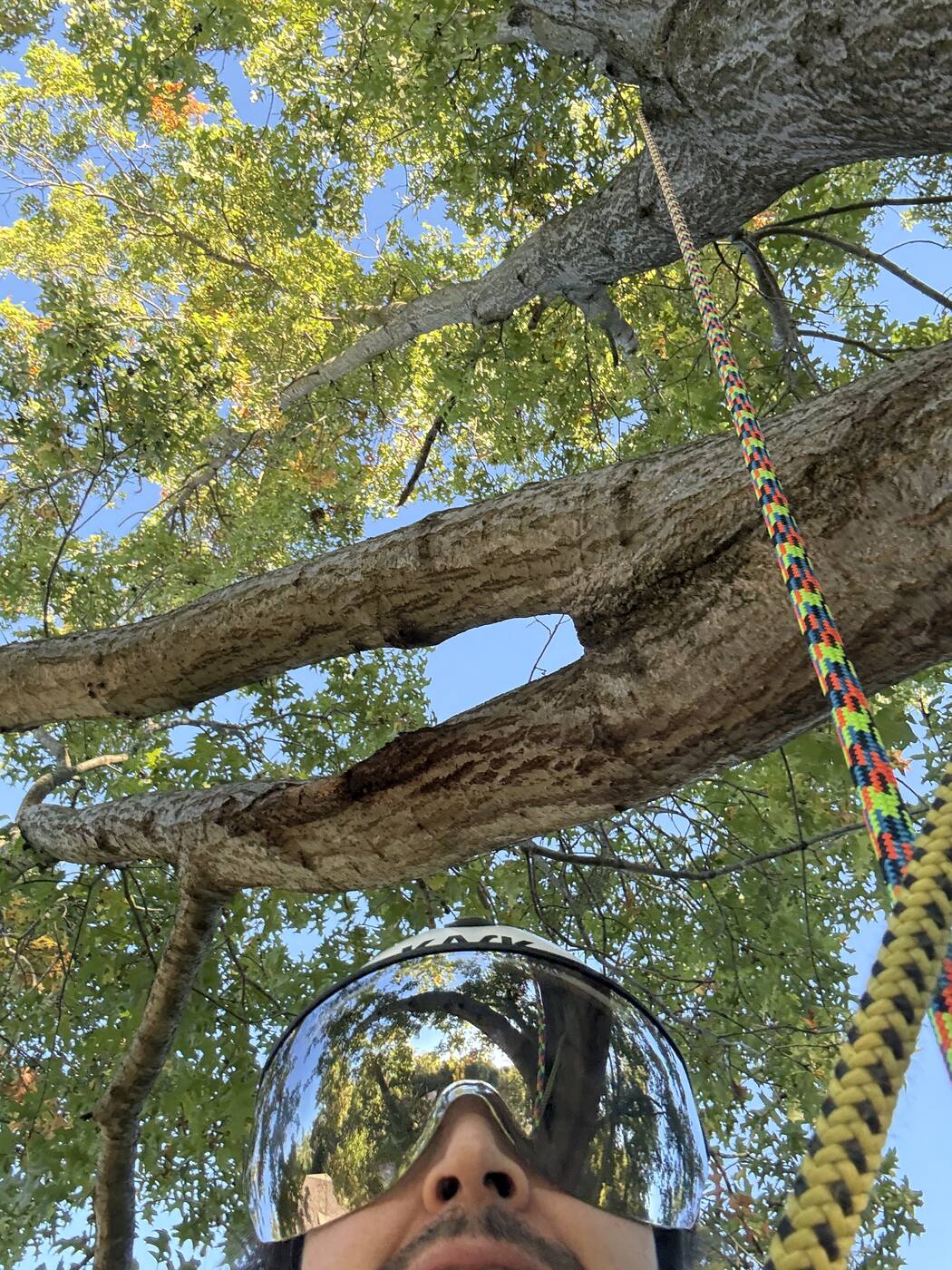
Silver maples often grow like this one, with four stems rising from one main union about 6 to 10 feet up. The unions are narrow V’s with bark pressed into them, which makes for a weaker attachment than a wide U. The tree has lost big limbs before, too, and the old wounds on its scaffolds have never closed.
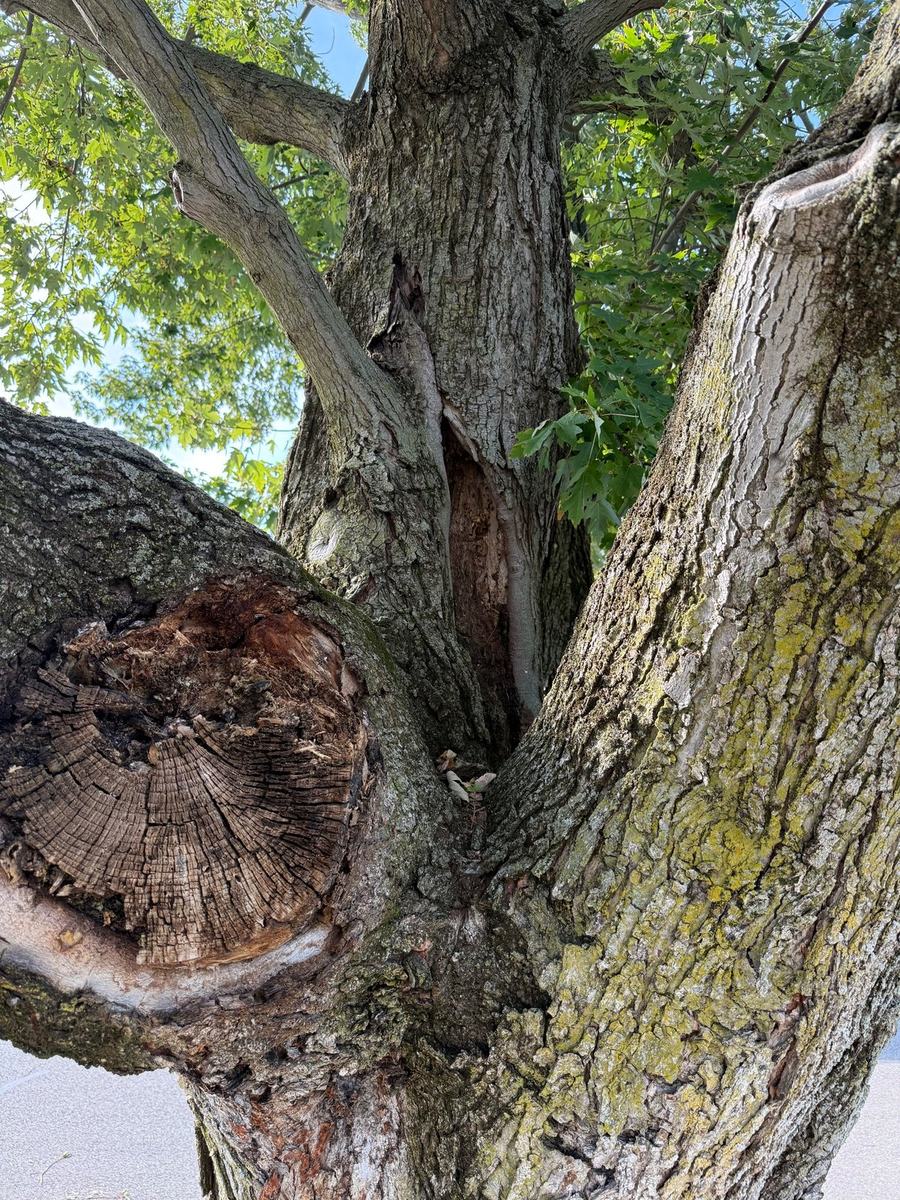
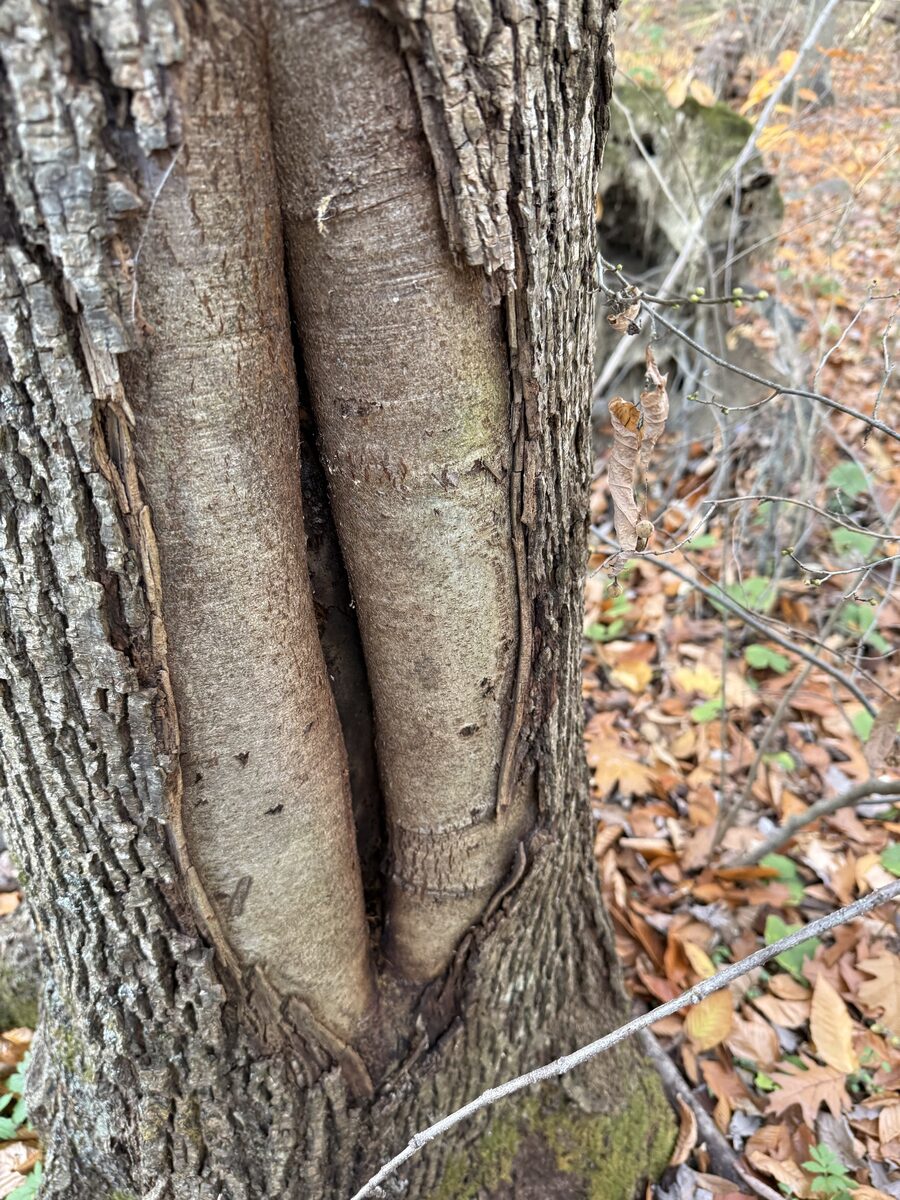
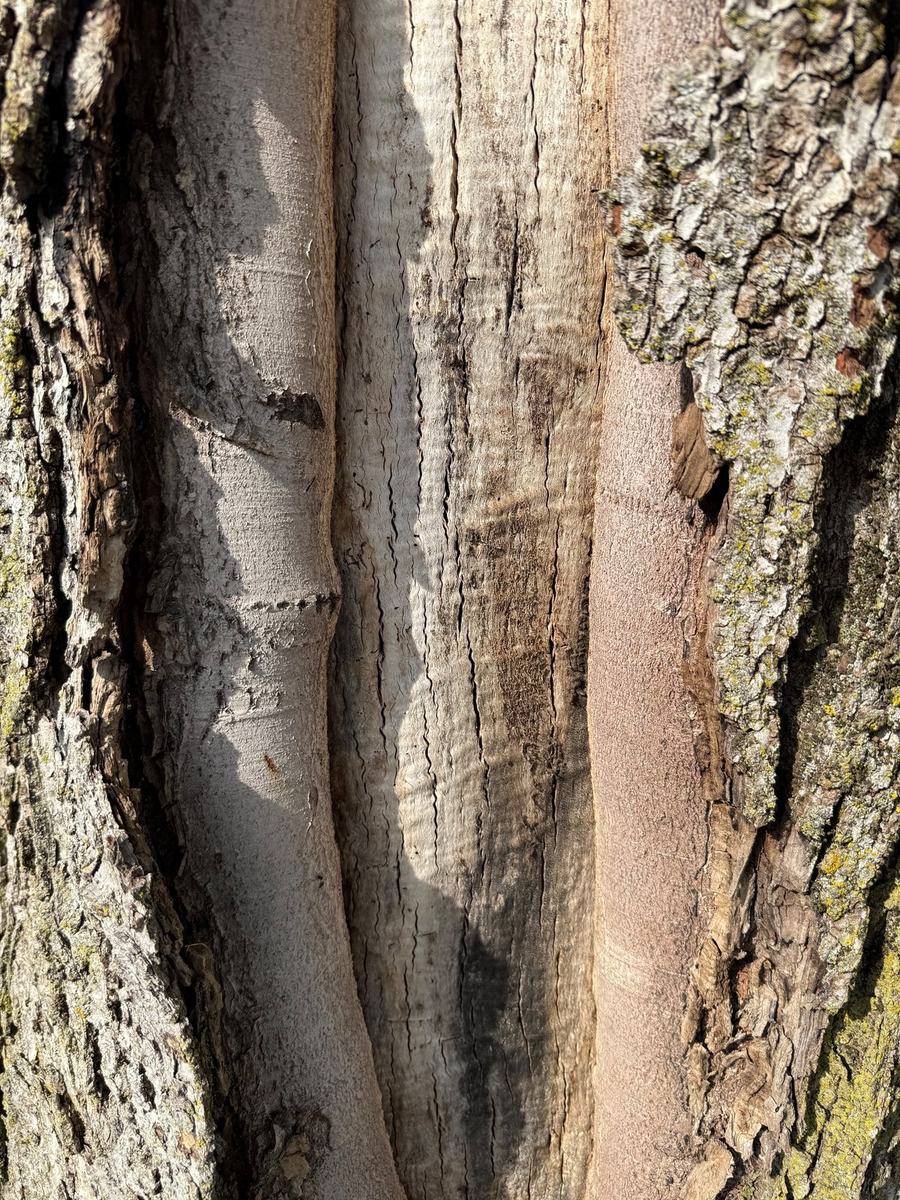
The main thing I was concerned about at first was the cavity. It was a big cavity, and it looked pretty bad, with a seam running up the lower trunk from it toward the union.
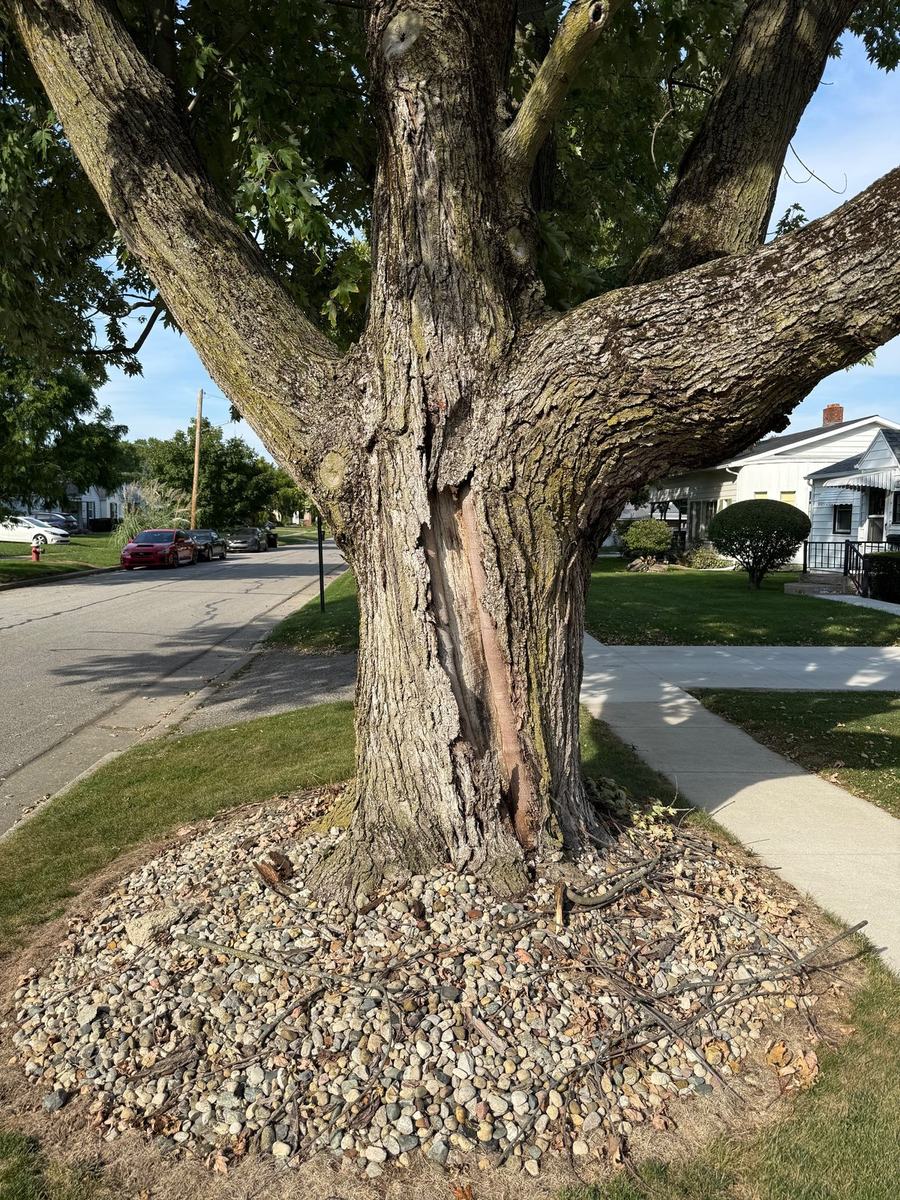
A closer look
I probed and sounded the cavity. The woundwood around it was pretty substantial, and the tree’s vigor was pretty strong. That told me the tree was spending a lot of energy building woundwood and reinforcing the wound. So, as weird as it sounds, after probing and sounding I wasn’t too concerned about the cavity itself.
How I rated the risk
What drew my attention was the large lead hanging over the house. The lead itself seemed secure and solid. The problem is that it puts a lot of extended load on a union that’s already weakened, and the seam coming up from the cavity could run on into that union. My concern was that under excessive load, in severe or extreme weather, that limb would fail, and it would come down on the house.
The other failures I rated:
- A scaffold limb at one of the old decayed wounds, over the sidewalk. Those limbs are long, heavy at the ends and decaying where they were cut, so I judged failure probable within a year, and somewhat likely to hit someone on a sidewalk people use every day. That set the rating at Moderate.
- The lower trunk splitting along the seam. The worst failure by far, but the woundwood and the tree’s vigor made it possible rather than probable. Low.
- One of the codominant stems pulling apart at the union. Possible. Low.
- Dead and hanging branches dropping. Probable, but pieces 2 to 8 inches across do minor damage. Low.
The highest of these is the tree’s overall rating: Moderate.
What I recommended
There were three options:
- Prune. Take out the dead, broken and hanging wood, and shorten the long scaffolds with the old wounds back to live side branches. That takes weight off, but leaves the risk at Moderate.
- Cable and brace. If the unions are sound inside, a cabling system between the main stems would support them, inspected every year. That also leaves the risk at Moderate.
- Remove the tree and plant something new in its place.
The way I look at it, I’d rather remove a tree that’s already been beat up pretty bad and put something else in its place. That’s what I recommended here.
What this tree taught me
A big, ugly cavity isn’t always the problem. When the tree has built thick woundwood around it and is growing well, it may be handling that wound just fine. Look past it. Here the real question was the load: one heavy lead, on a weakened union, over a house. And when a tree has already been through this much, starting over with a new one is often the better bet than propping up the old one.