What Are the Black Spots on My Maple Leaves?
Black, tar-like spots on maple leaves are tar spot, a leaf fungus. An arborist explains why it looks worse than it is and what actually helps.
 By Adam O'Connor, ISA Certified Arborist
4 minutes read
On this page
Late every summer I always get called out to assess a ‘dying’ tree only to find that it has tar spot. The questions start: the maple out front is covered in black spots that look like someone flicked tar on the leaves, and is the tree dying?
Almost always, no. It’s tar spot, and it’s one of the most alarming-looking and least harmful things that happens to a maple.
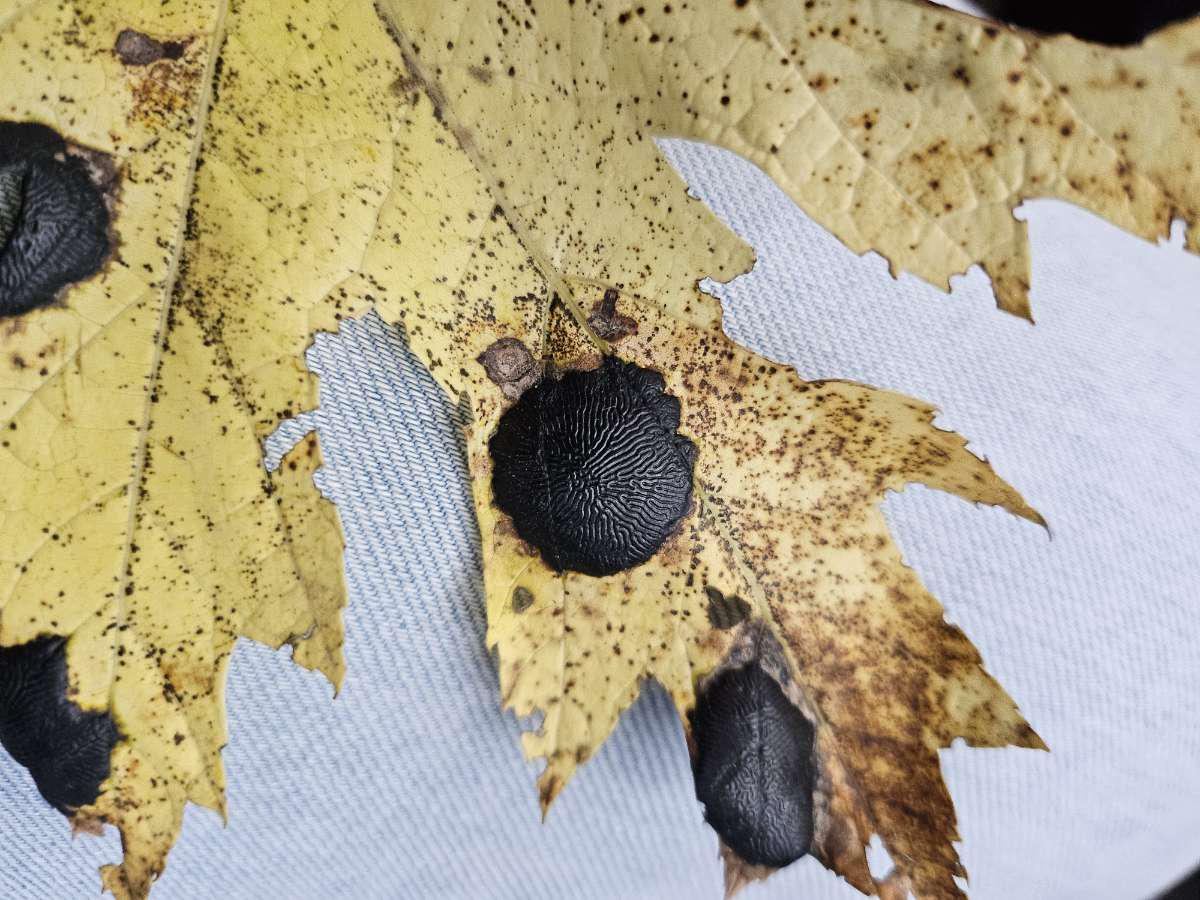
What tar spot is
Tar spot is a fungus that lives in maple leaves. It doesn’t get into the branches, the trunk or the roots. All it does is mark the leaves, and those leaves were going to fall in a few weeks anyway.
The spots start in early summer as small yellow-green patches you’d probably never notice. By late summer they’ve turned into the raised black spots, often half an inch across or more, with a wrinkled surface like a fingerprint. Some kinds make one or two big spots on a leaf; others make a scatter of small black specks.
You’ll see it most on Norway maples, and on silver and red maples too.
Why some years are so much worse
The fungus spends the winter in the fallen leaves on the ground. In spring, just as the new leaves open, it releases spores from those old leaves, and wind and rain carry them up into the tree.
A wet, cool spring means a lot of spores and a lot of new infections. That’s why one year your tree barely has a spot and the next it’s covered: it’s the weather in April and May, not something new wrong with the tree. By the time you see the black spots in August, the infection happened months ago.
Is it hurting my tree?
For a healthy, established maple, not in any way that matters. In a bad year the tree may drop some leaves a little early, which looks dramatic but costs it very little this late in the season.
What I’d pay more attention to is anything else going on with the tree. If a maple with tar spot also has dead branches in the top of the crown, leaves that are small or thin all season, or fungus at the base of the trunk, those are the things to have looked at. The black spots aren’t the cause.
What actually helps
Rake up the leaves in fall. This is the one thing that makes a difference. The fungus overwinters in fallen leaves, so getting them off the lawn and beds cuts down the spores next spring. Bag them, send them out with yard waste, or put them in a compost pile that gets properly hot. Leaving them where they fell under the tree gives the fungus its best start.
Get the neighbours in on it. Spores travel, so a street lined with maples gets the best results when everyone rakes. Your tree can still pick some up from next door.
Look after the tree in general. Water a young or stressed maple during a dry spell, keep mulch spread a few inches deep out toward the dripline and off the bark, and keep mowers and string trimmers away from the trunk.
Don’t spray a big tree for it. Fungicide would have to go on in spring as the leaves open, and on a mature maple that means coating a whole canopy for a problem that’s cosmetic. It isn’t worth the cost or the chemicals.
When to call an arborist
Tar spot alone isn’t a reason to call. Have the tree looked at by an ISA Certified Arborist if:
- the leaves are thin, small or scorched all summer, not just spotted late in the season,
- there are dead branches in the top of the tree,
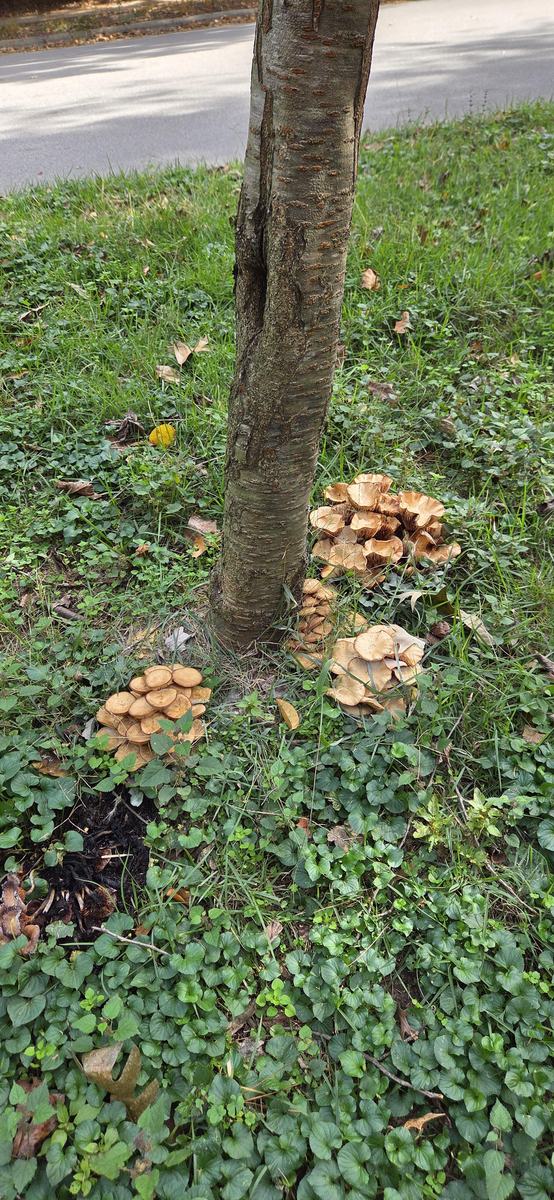
- you see mushrooms or conks at the base or on the trunk (see Why am I seeing mushrooms all of a sudden on my tree?),
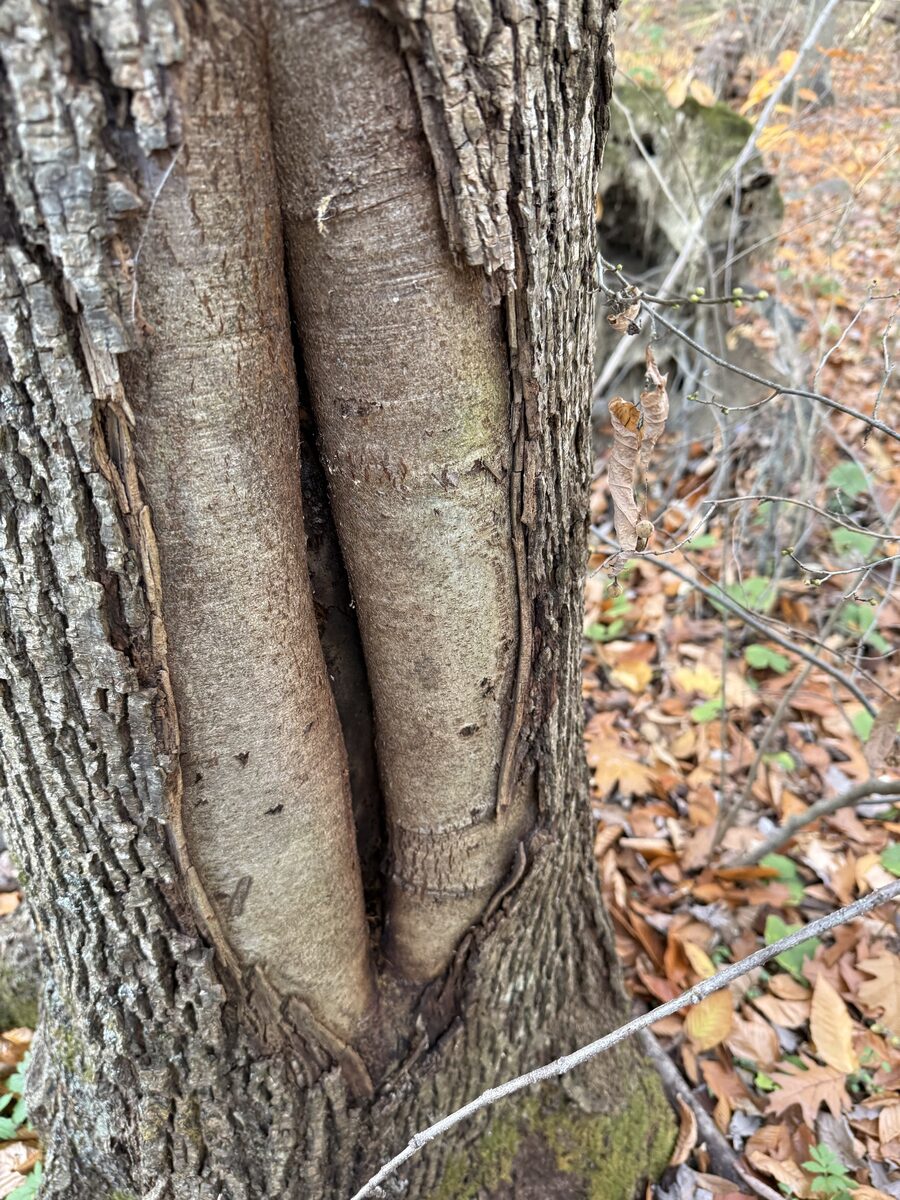
- the bark is cracked, oozing or falling away.
Otherwise, rake those leaves this fall and expect the spots to come and go with the weather.