Case Study: A Small Cavity That Wasn't So Small
A healthy sugar maple with a small, well-sealed cavity 15 feet up, until the homeowner mentioned the squirrels. What the ladder showed, and why it rated Low.
 By Adam O'Connor, ISA Certified Arborist
4 minutes read
On this page
At a glance
- Tree: Sugar maple, Acer saccharum
- Size: About 32 inches DBH, 76 feet tall
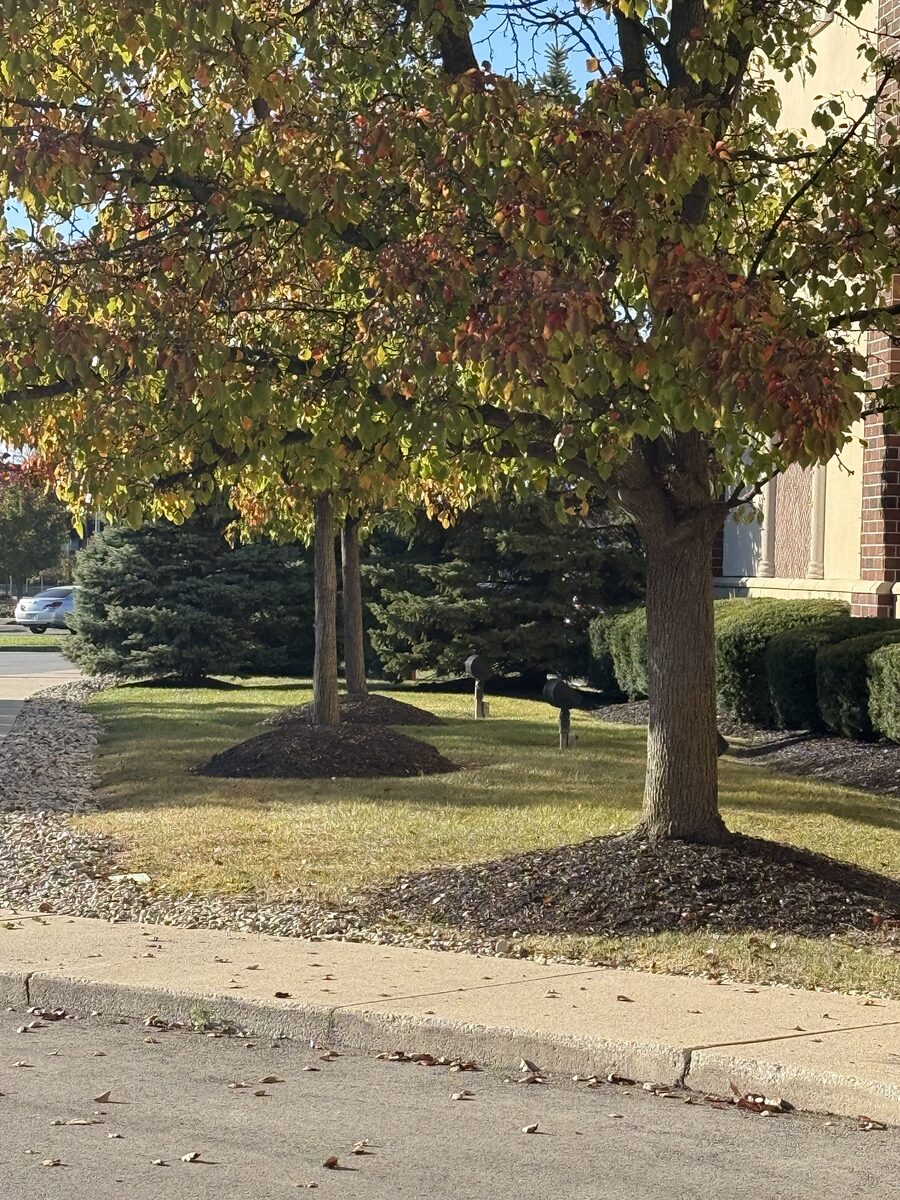
- Setting: A street tree between the sidewalk and the street, Northwest Ohio
- What’s in reach: The sidewalk, the street and its parked cars, and the houses nearby
- Overall risk rating: Low
- Recommended: Reassess in one year to make sure the cavity is holding up
Why I was called
I was called out to look at this sugar maple. Again, at first glance trees always look pretty healthy for the most part, unless something’s really bad. I used my tape, probe, scope and mallet to assess it.
What I saw
Going through the tree, I couldn’t really find anything majorly wrong with it. The base looked pretty healthy, and so did the trunk.
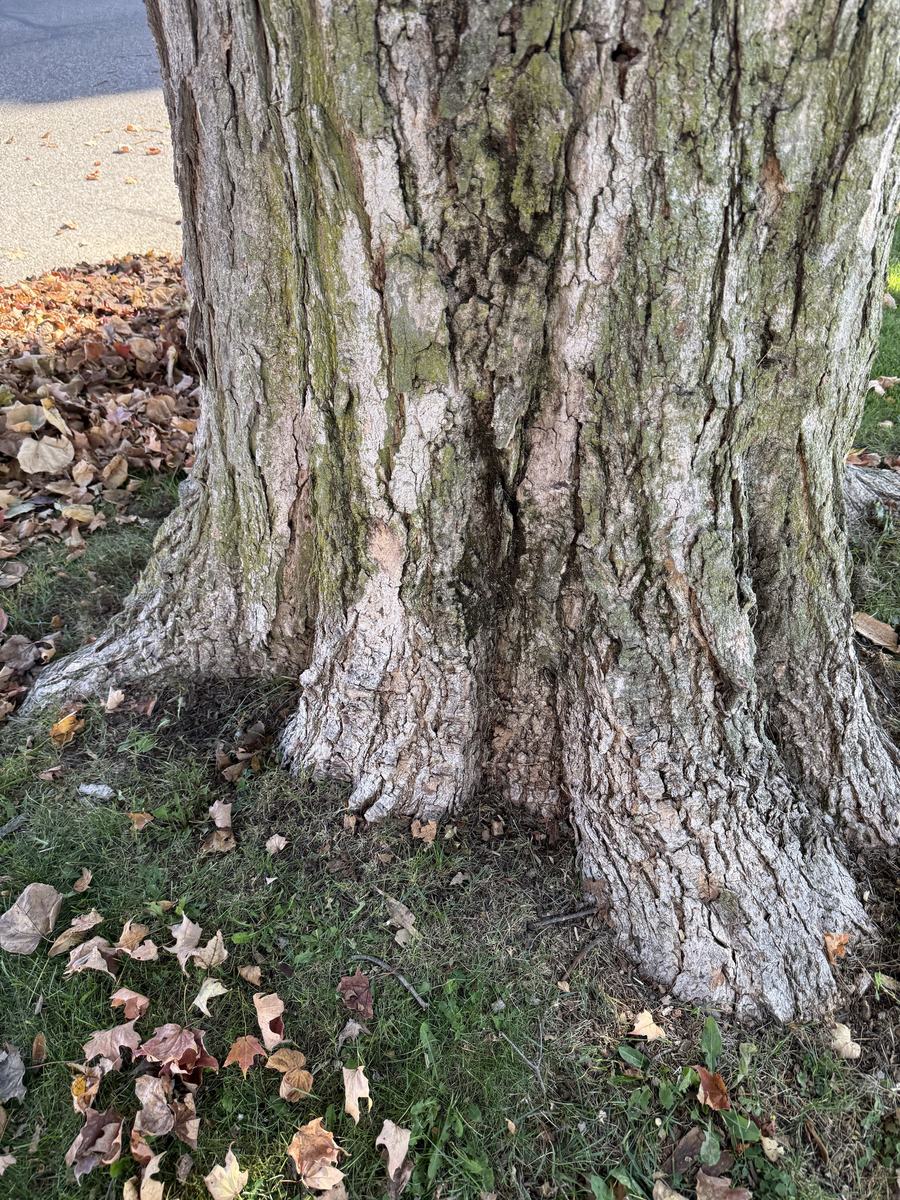
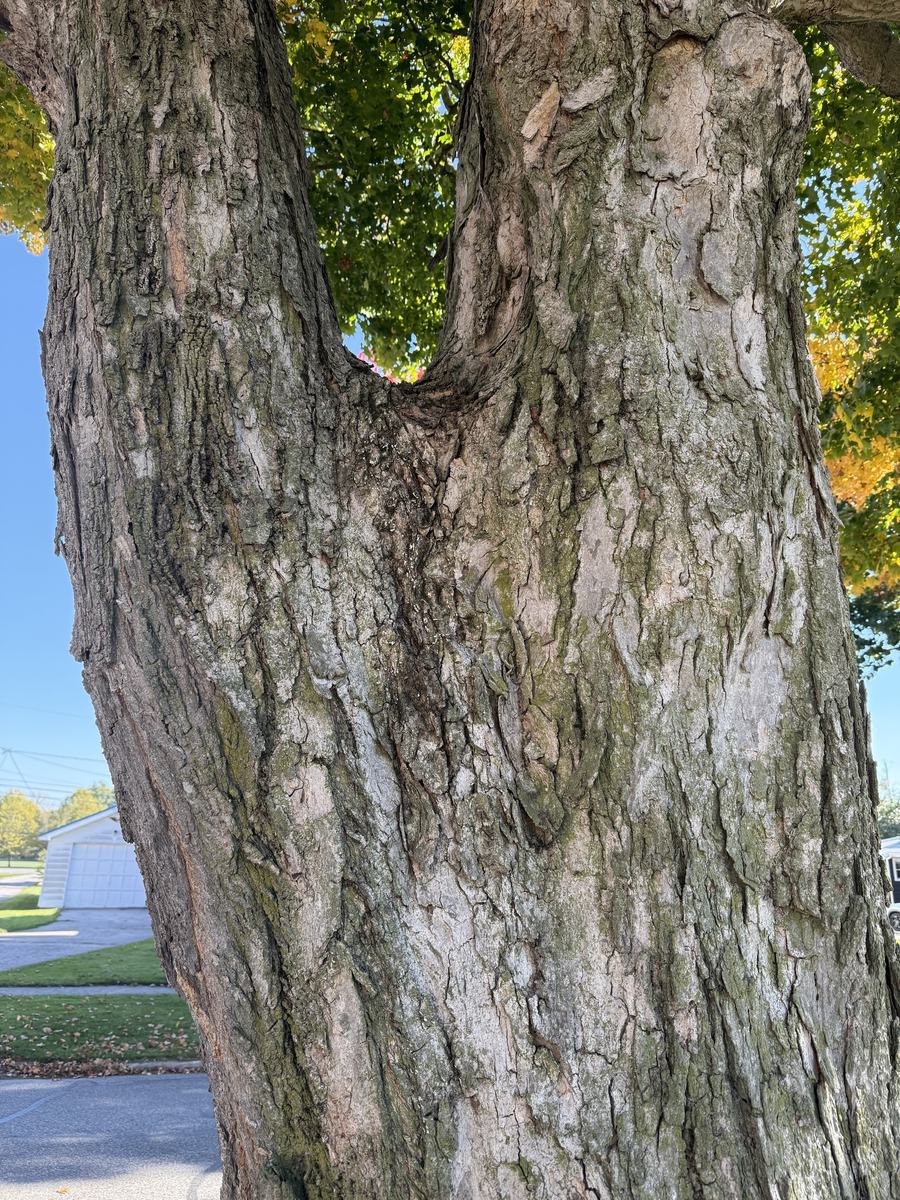
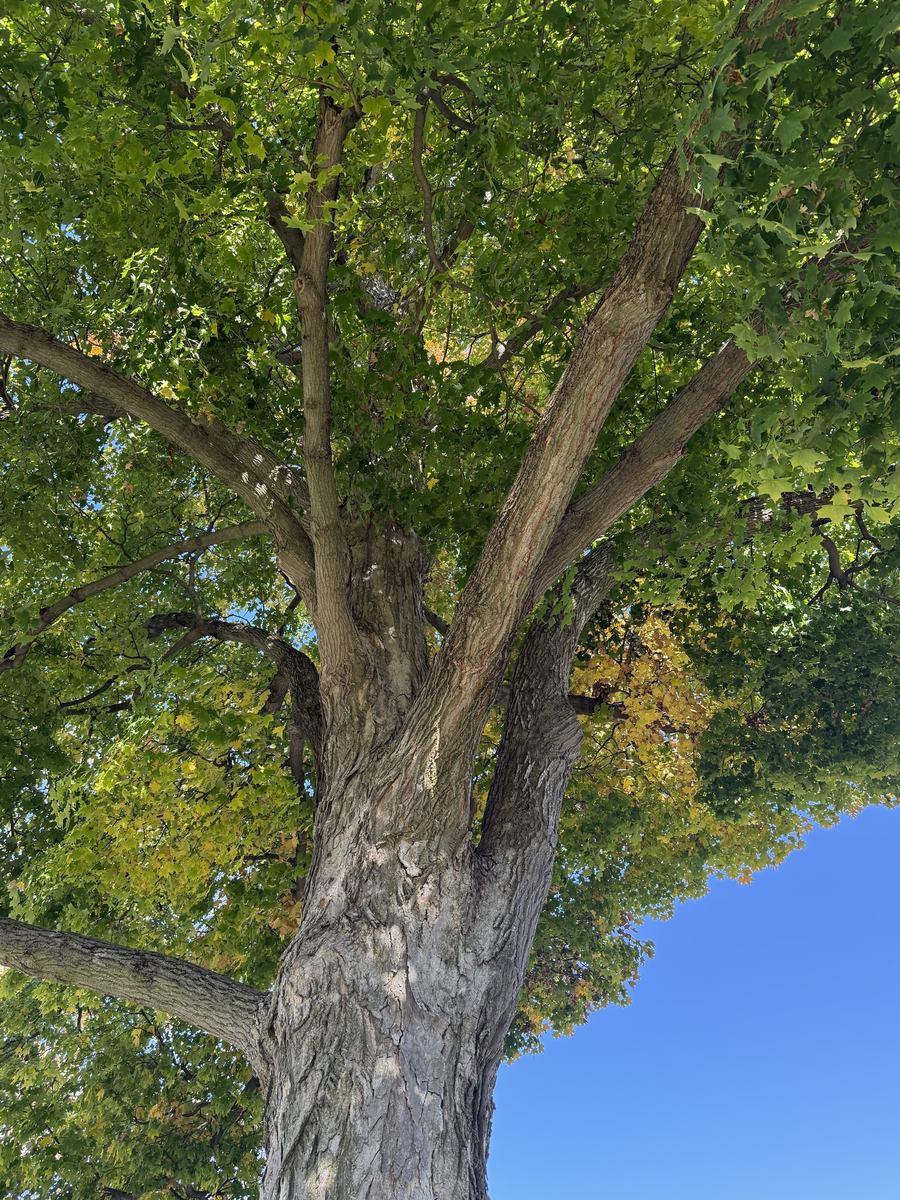
When I scoped the crown, I found the normal amount of deadwood and some pruning that needs to be done. Most of the trees in this neighborhood need a lot of pruning, so that seemed pretty typical.
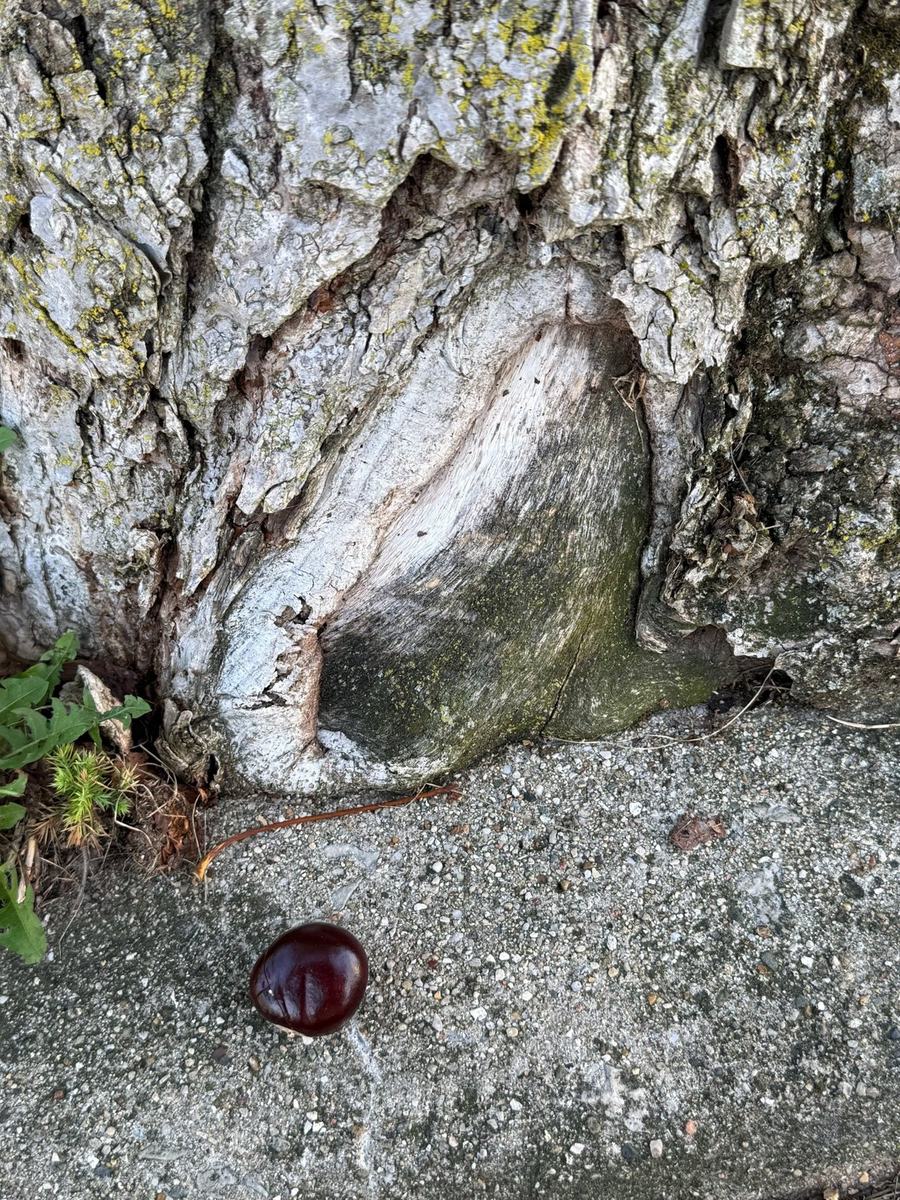
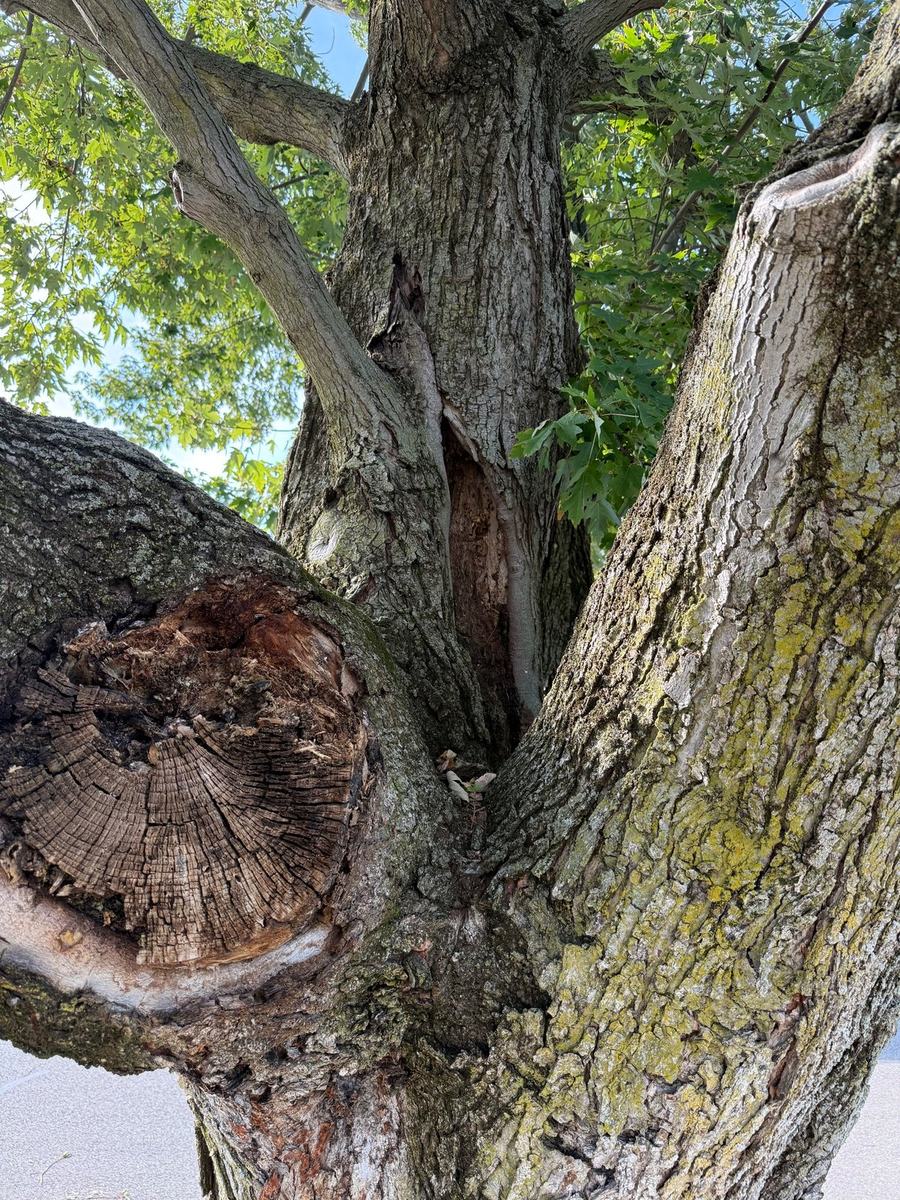
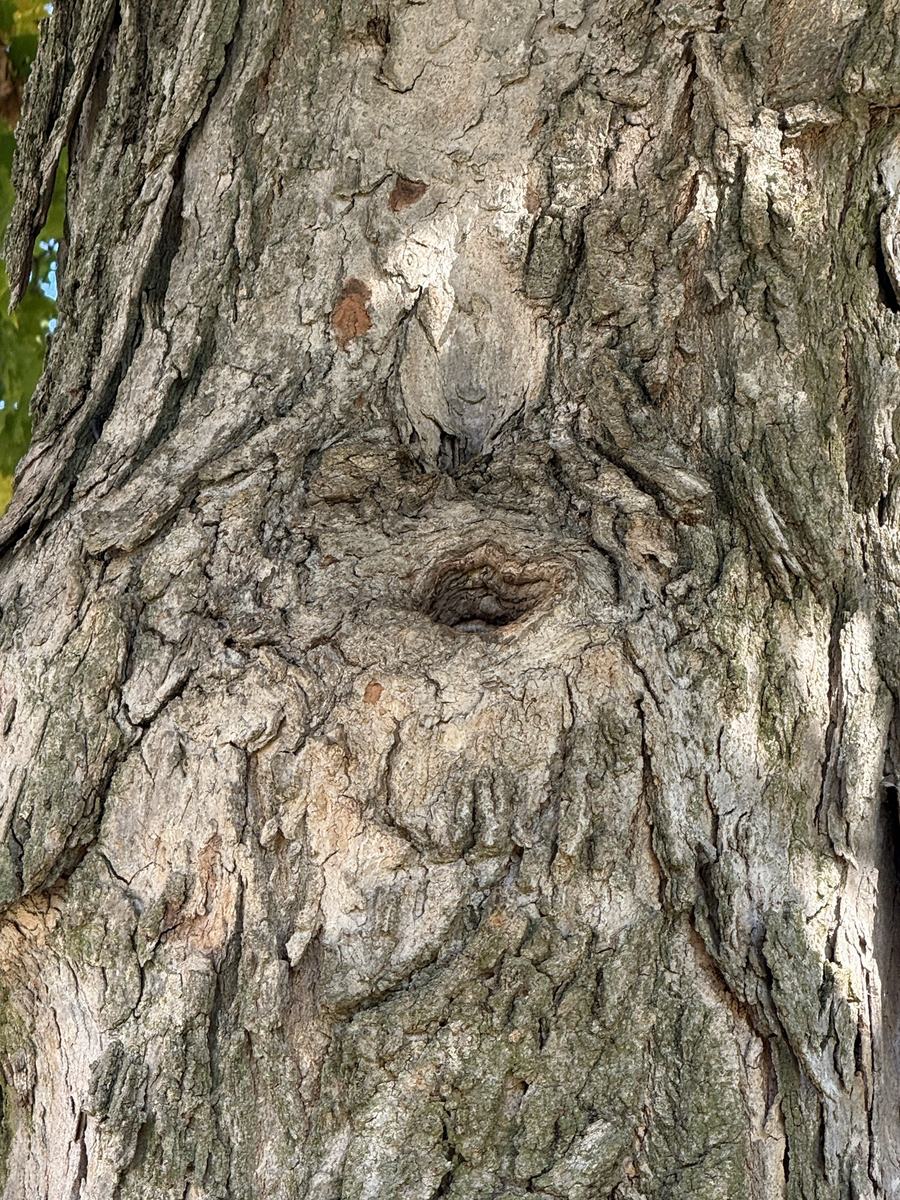
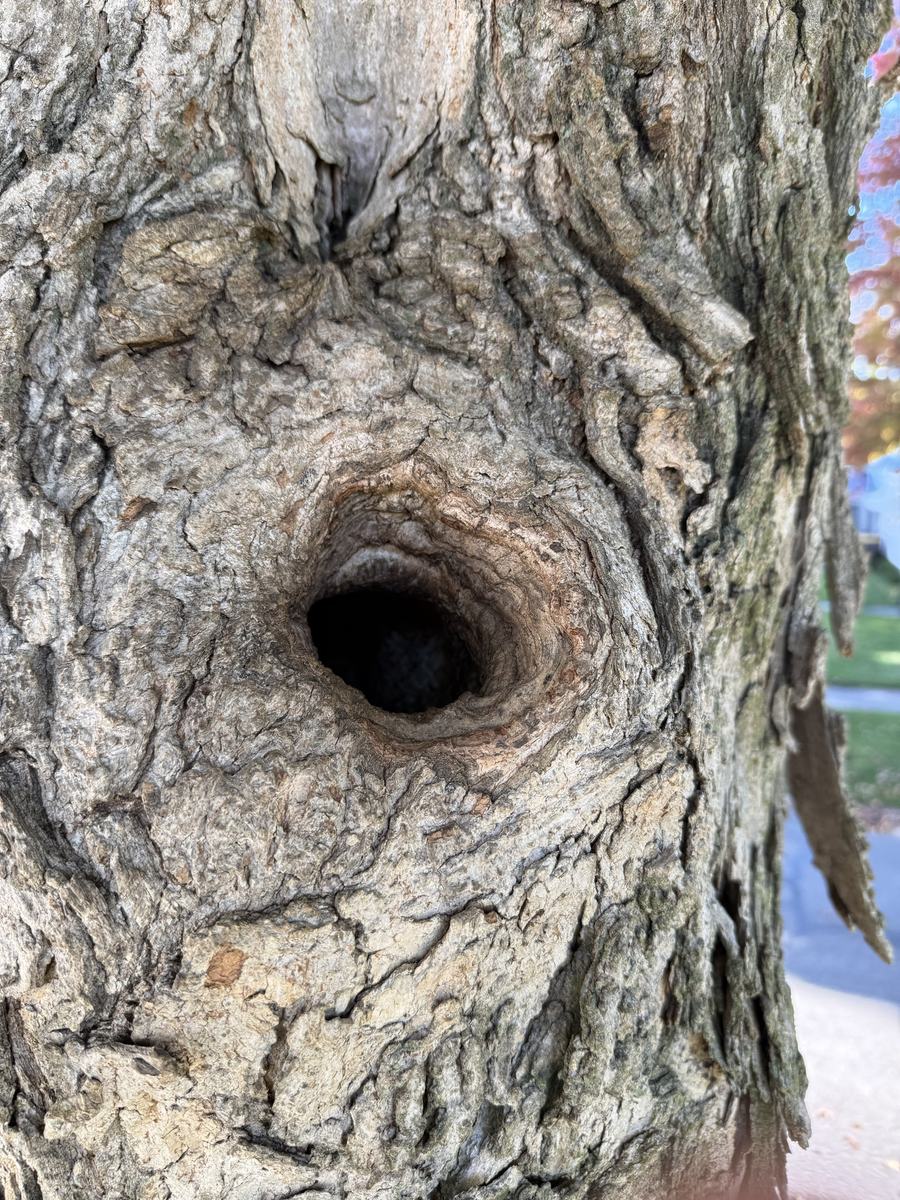
My main concern was the cavity. It was about 15 to 20 feet up, so I couldn’t see it very well, and I scoped it as best I could from the ground. From there I could see a lot of woundwood around it. Typical for the species, and especially for a tree with a lot of vigor, it had sealed up really nicely, with a pretty thick roll of woundwood around a cavity that looked pretty small.
A closer look
Then the homeowner came out and told me they see a lot of rodents, in this case squirrels, going in and out of that cavity. So I decided to take a closer look.
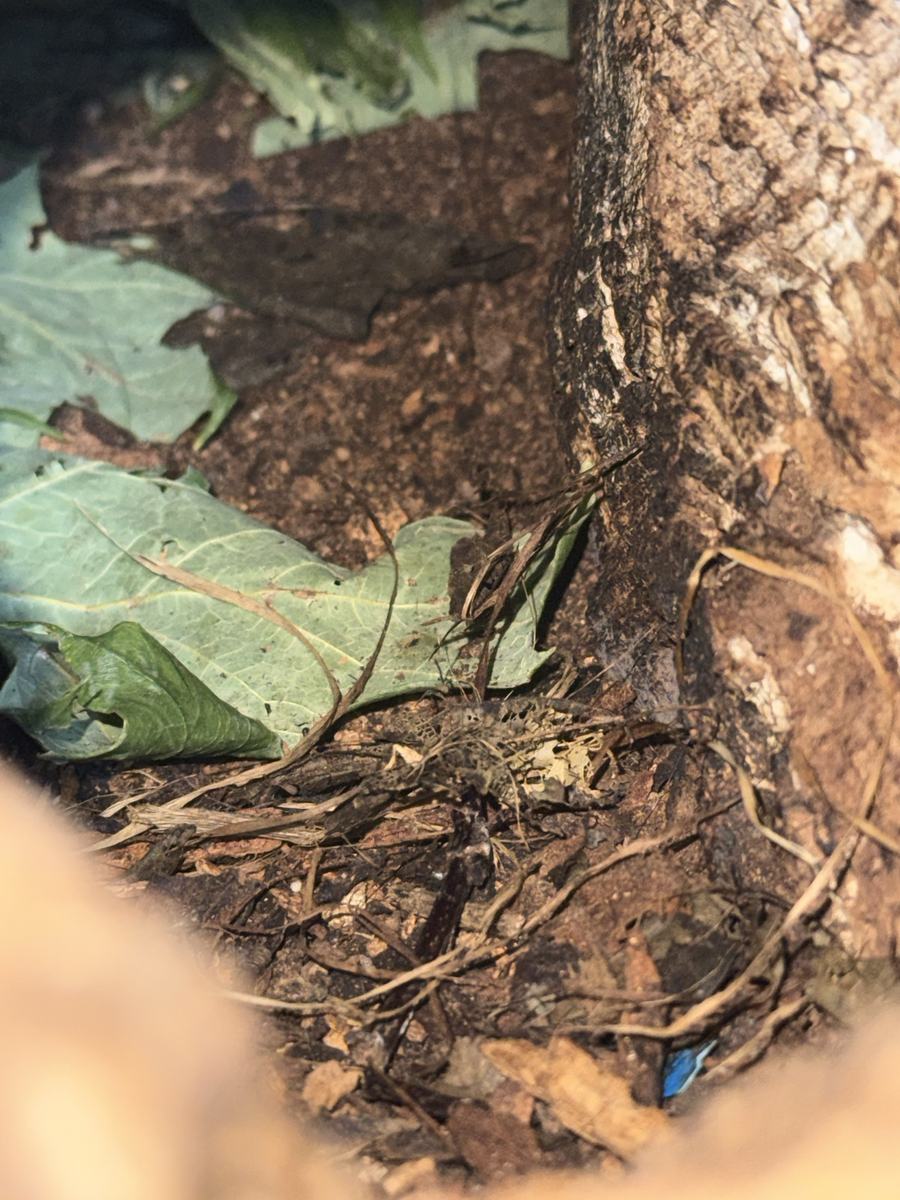
I used a ladder to reach the cavity and scope inside it with my flashlight. I was quite surprised: the cavity was quite large, probably a good 15 inches deep.
The squirrels had started building a nest inside it from neighboring leaves, in this case oak leaves blown over from an oak next door.
When I probed inside the cavity, the wood was pretty solid. The decay was pretty much gone for the most part, and it was essentially all new woundwood. That woundwood was quite thick, definitely more than 15 percent, more like 25 to 30 percent on each wall. Because of that, I wasn’t too concerned about it.
How I rated the risk
With a solid, thick wall of woundwood around the cavity, a healthy base and trunk, and nothing beyond normal deadwood in the crown, I rated this tree Low risk.
I rated it Low because of the likelihood of failure. Even though there was a large cavity, that doesn’t necessarily mean the tree is going to fail anytime soon. Because of this and my findings, I rated that failure as Possible, which, run through the risk matrices, came out to Low risk.
What I recommended
I decided to come back in a year to reassess the cavity. Even though I rated the assessment over three years, coming back sooner is just something I personally do, to make sure no more decay had set in and to get a better feel for whether the cavity was holding up. The deadwood and the pruning it’s due can be done in the meantime.
What happened
I let the homeowner know that I did not see any immediate danger with the cavity because the tree was quite vigorous and had sealed up the wound quite well. Further, the amount of woundwood was substantial, ~30% per wall or so. I suggested a re-assessment in a year to verify any further loss of wood.
What this tree taught me
A cavity that looks small and well sealed from the ground can be much bigger inside. Listen to the homeowner. They see the tree every day, and squirrels going in and out told me it was worth the ladder.