Case Study: A Pin Oak With a Rough-Looking Base
A pin oak with conks and rot at its base, on ground that floods every spring. Why sound wood and wound wood made it Low risk anyway.
 By Adam O'Connor, ISA Certified Arborist
3 minutes read
On this page
At a glance
- Tree: Pin oak, Quercus palustris
- Size: About 17 inches DBH, 60 feet tall
- Setting: A homeowner’s yard on low ground that floods, Northwest Ohio
- What’s in reach: Not much: people walking past on the road. The power lines may be out of reach
- Overall risk rating: Low
- Recommended: Reassess in 3 years, with a look in a year’s time
Why I was called
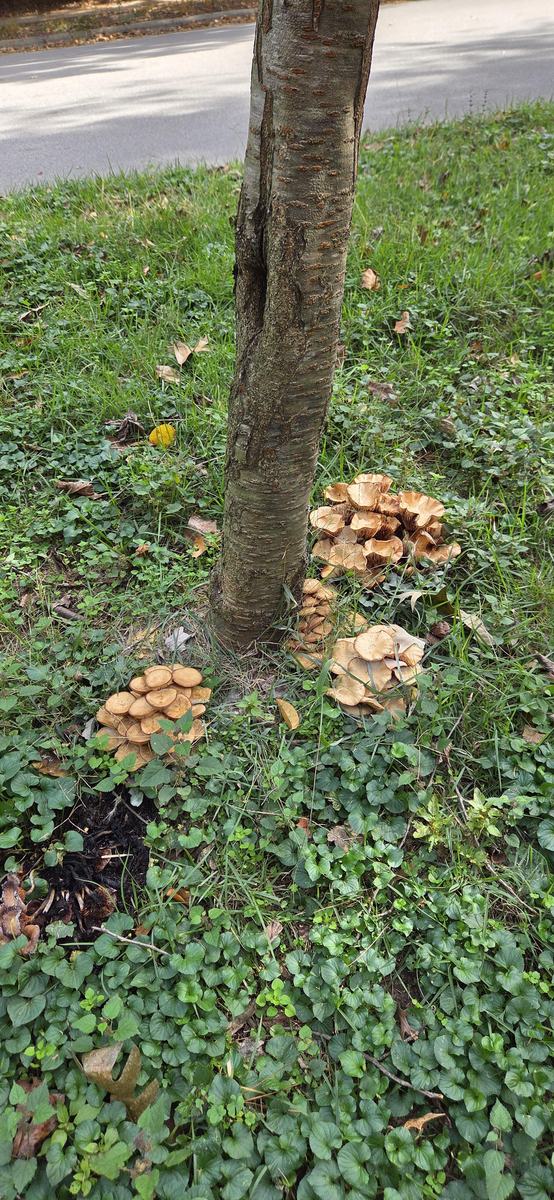
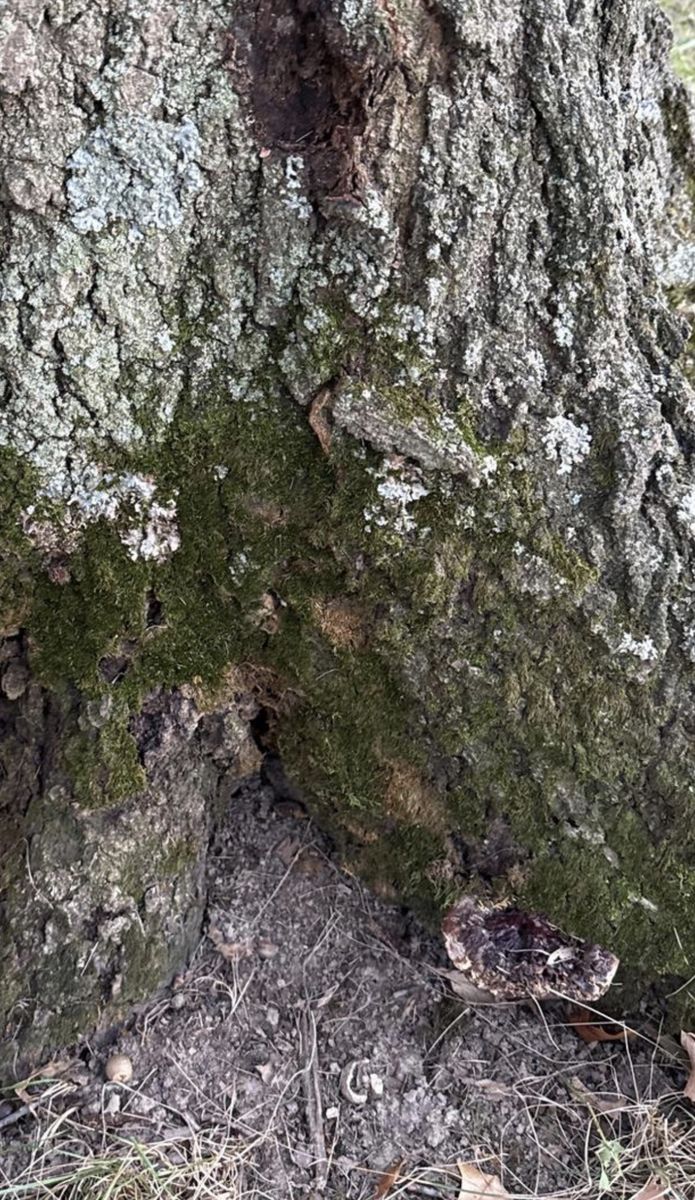
The client called because they were concerned about the pin oak. It was showing some conks at the base.
The site and what’s in reach
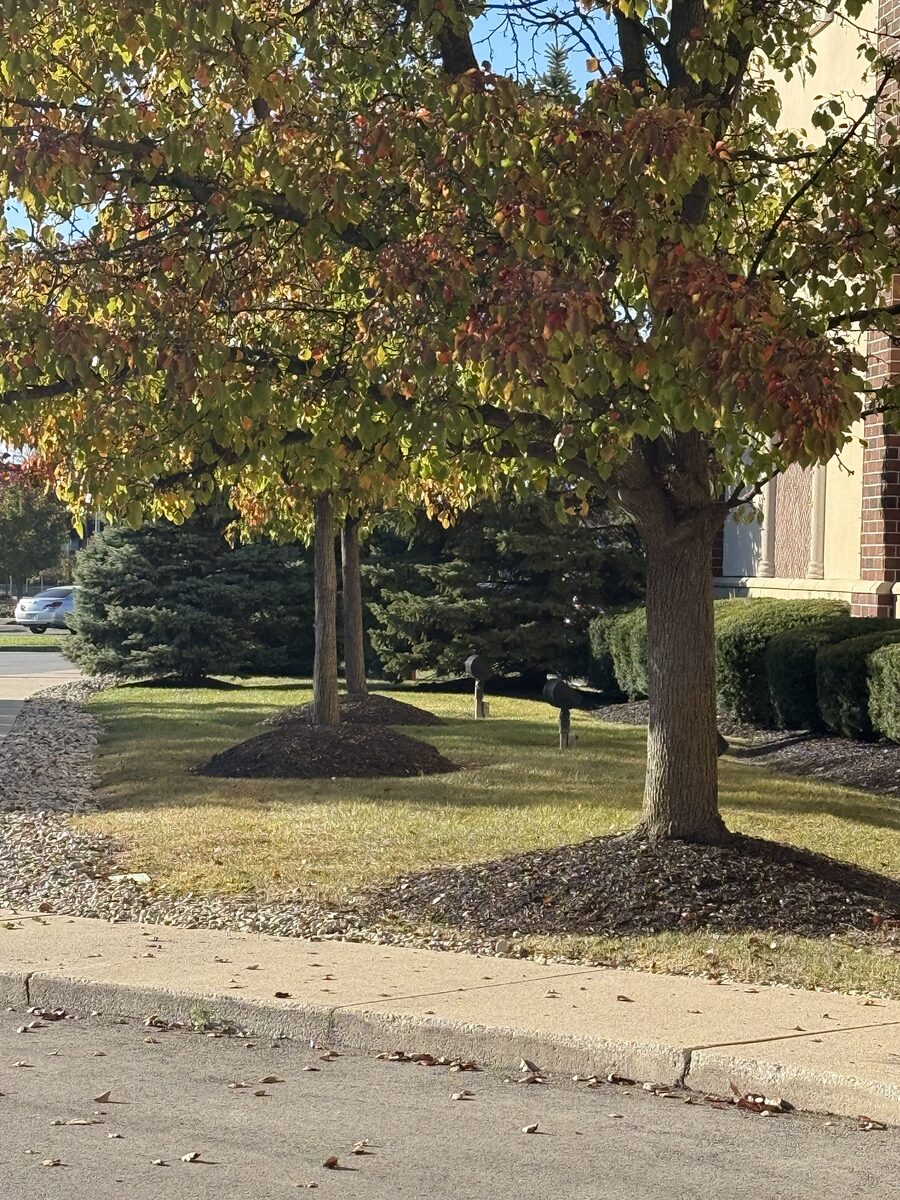
The ground here floods. In the springtime, and sometimes in the fall, the homeowner said it’s common for the pin oak to be standing in water.
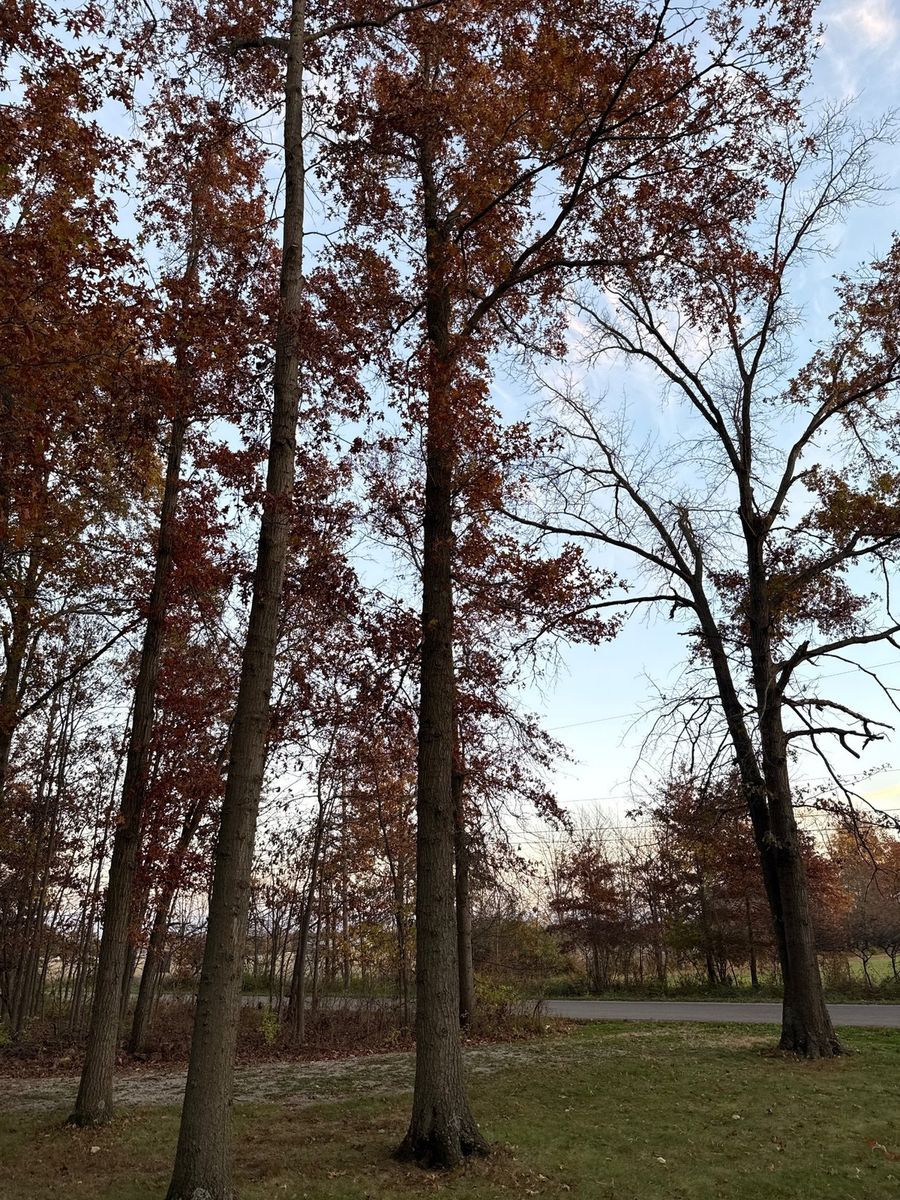
There wasn’t much within reach. The only real targets would be people walking past on the road. There are power lines along the road too, but they may not be in reach. I’d have to verify that with a laser.
What I saw
The tree’s vigor seemed pretty healthy, and soundings with a mallet on the trunk were solid.
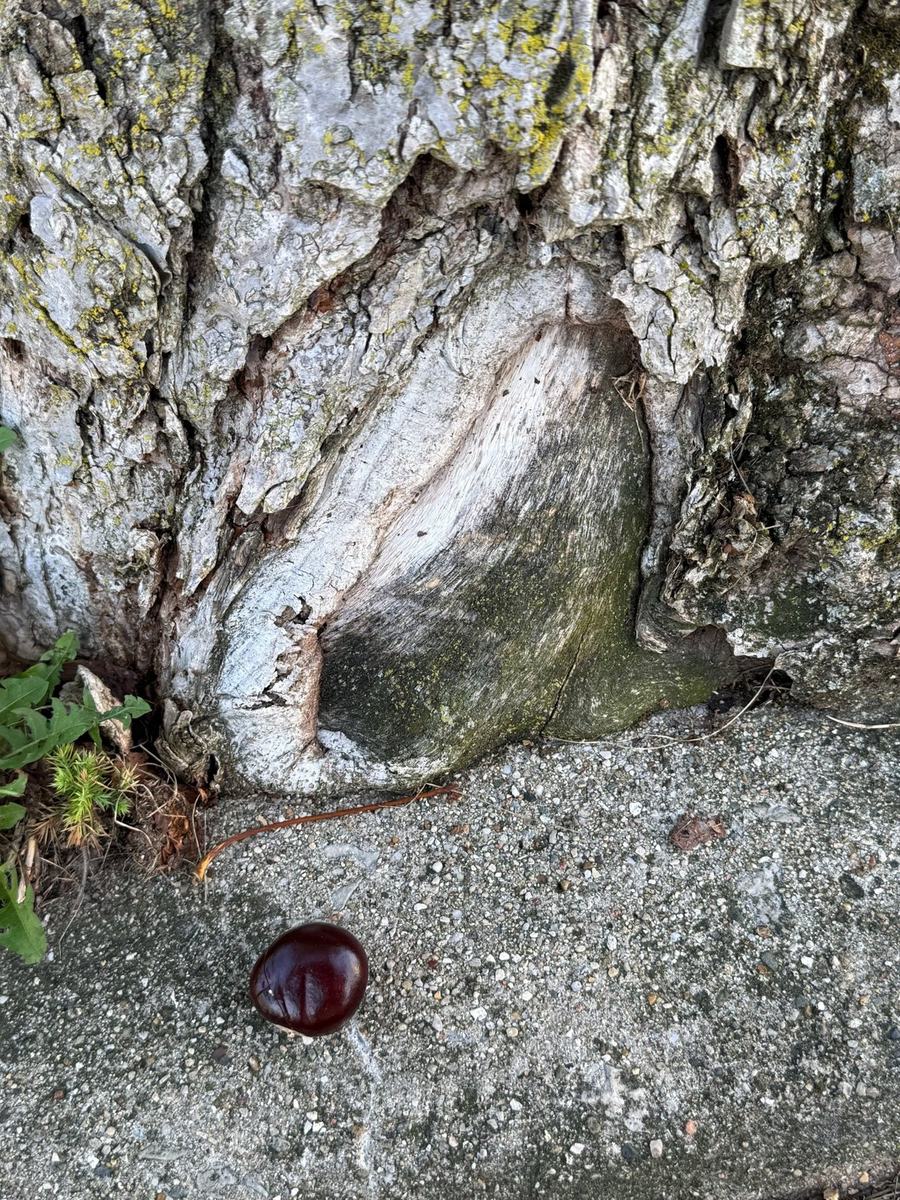
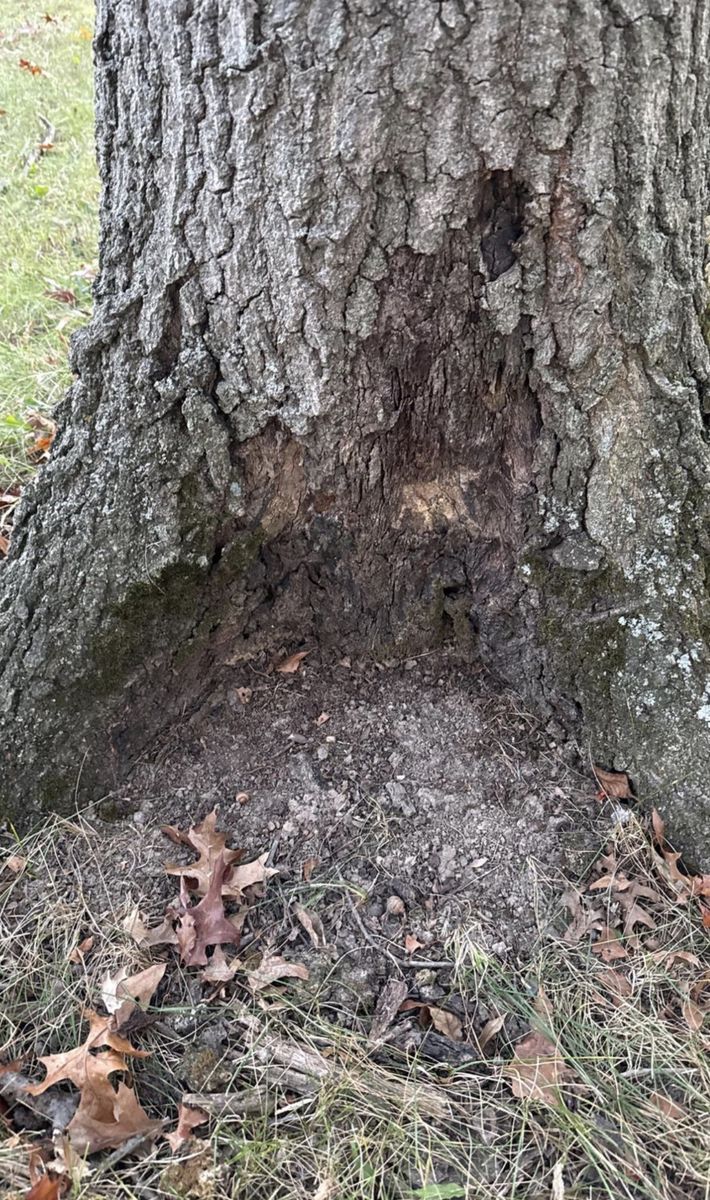
The base was a different story. It looked pretty rough. One side was pretty rotted out, and the other side had several conks.
A closer look
As bad as it looked, it was still pretty solid. When I sounded the base as well as the trunk, it sounded solid. Probing the roots and the root flare, I didn’t find any substantial decay beyond what was visible.
The side with the most rot also had a substantial amount of wound wood growing around it. That, combined with the solid soundings and probing, makes me pretty confident the tree has done a good job of compartmentalizing the decay and has sealed a lot of it off.
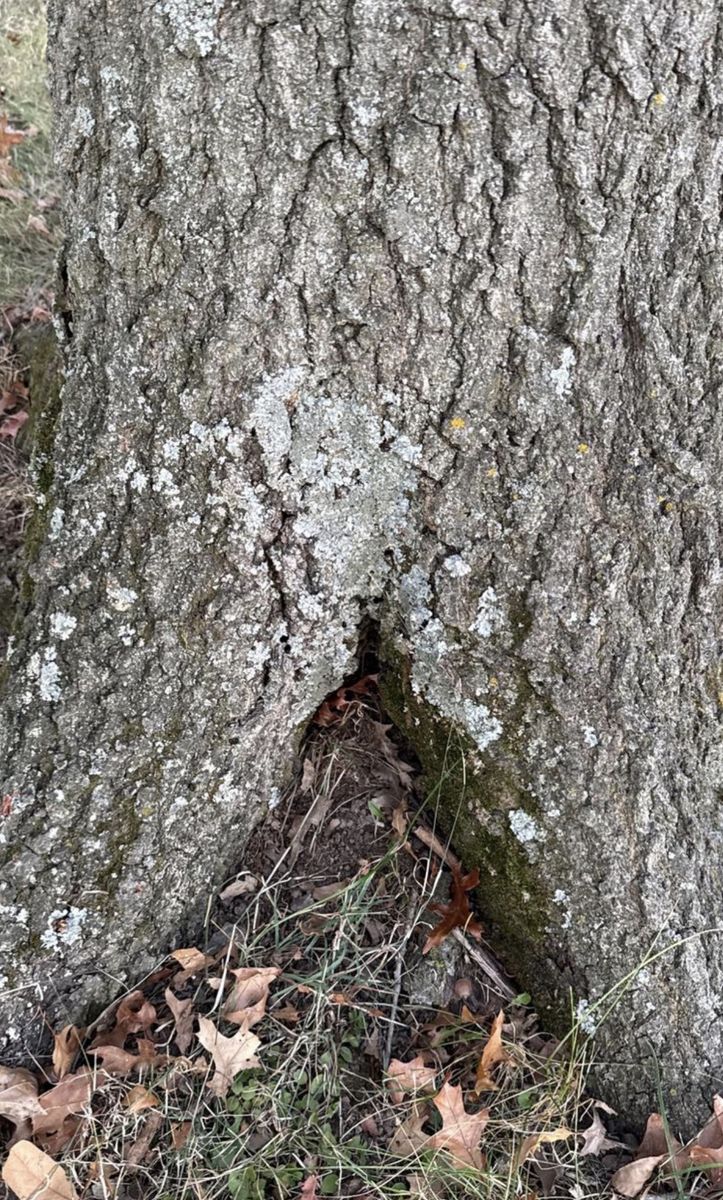
The flooding is what caused all the decay. A base that sits in water spring after spring is a hard place for a tree.
How I rated the risk
Since the soundings were solid, probing found no substantial decay beyond what I could see, the wound wood was there, and there were no substantial targets around the tree, I rated it Low risk through the risk matrices.
What I recommended
I recommended another assessment in three years. Even so, I may pop back in on this tree in a year just to check on it.
What this tree taught me
A rough-looking base isn’t the whole story. Conks and rot get your attention, but the mallet and the probe tell you how much sound wood is left, and wound wood tells you the tree is fighting back. Check before you condemn a tree on looks.